STAGE 11: FROM PONFERRADA TO O CEBREIRO
Erea FabeiroStage 11 is one of the great transformations of the French Way. In 52 km you cross the Valle del Bierzo — the most fertile and culturally distinct region of León, where the vineyards, the food and the accents already carry the weight of Galicia — climb Los Ancares into the mountains on the provincial border, and arrive at O Cebreiro, the first village in Galicia: a place of pallozas (pre-Roman round stone houses), the oldest church in Galicia, and a legend about the Holy Grail that shaped the flag of a nation. By the time you reach the top you will have pedalled through three distinct cultures in a single day, and earned one of the best views on the entire Camino.
Planning the full route? Our the full Camino de Santiago cycling route page maps every stage, with distances and planning tips.
| Distance | Elevation gain | Estimated time | Difficulty | Distance to Santiago |
|---|---|---|---|---|
| 52 km | +900 m cumulative | 5–7 hours riding | 🔴 Very high | ~202 km |
Rent your bike for the Camino: from €22/day (conventional bike) or €33/day (e-bike) on a one-week trip. 2027 rates, bike transport not included.
See availability and priceKey stops: Camponaraya (km 7) · Cacabelos (km 16) · Villafranca del Bierzo (km 24) · Trabadelo (km 33.5) · Vega de Valcarce (km 40.5) · Las Herrerías (km 44) · O Cebreiro (km 52)
No external detour: O Cebreiro itself — pallozas, the oldest church in Galicia, the Holy Grail legend — fully occupies the afternoon.
Route profile and key milestones
Leaving Ponferrada: the Museo de la Energía and the road west (km 0–7)
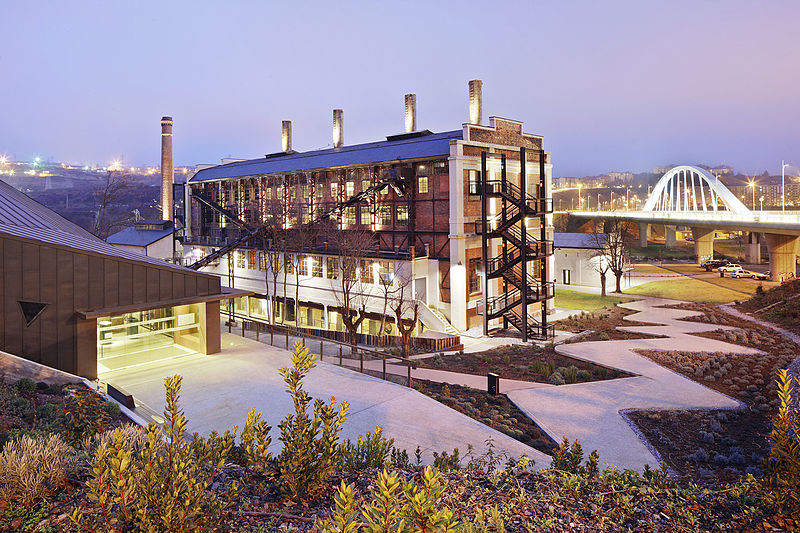
The simplest exit from Ponferrada by bike: cross the Puente del Castillo, take the second exit at the Plaza Portales roundabout onto Avenida de Asturias, and follow it straight through five more roundabouts, passing under the N-VI. At the roundabout after the underpass, turn left and enter Columbrianos. This is not the traditional Jacobean route (which follows the Puente de la Puebla and the Avenida Huertas del Sacramento) but is significantly cleaner for cyclists.
If you prefer the traditional exit, it passes the Museo de la Energía — Spain’s first thermal power plant, opened in 1949 in a building that would not look out of place in an industrial city of northern England. The museum occupies what was the Compostilla I plant; the story is more dramatic than the building suggests. Years after the opening, a historical investigation concluded that during the inauguration ceremony in 1949, an assassination attempt against Francisco Franco had been planned and nearly carried out on these premises. The plant was decommissioned in the 1970s when the larger Compostilla II facility, visible from here on the Sil riverbank, took over. Today it is a science and energy education centre. The name of the surrounding neighbourhood — Compostilla — is itself a Jacobean reference, a contraction of Compostela.
Either exit leads to Columbrianos, then by asphalt track to Camponaraya (km 7). The town is the product of the medieval union of two villages — Campo and Naraya — consolidated in the 15th century, when Naraya already had pilgrim hospitals. Passing through the main street and turning left after a roundabout onto a concrete track beside a wine cooperative, the route begins climbing gently through the vineyards of El Bierzo.
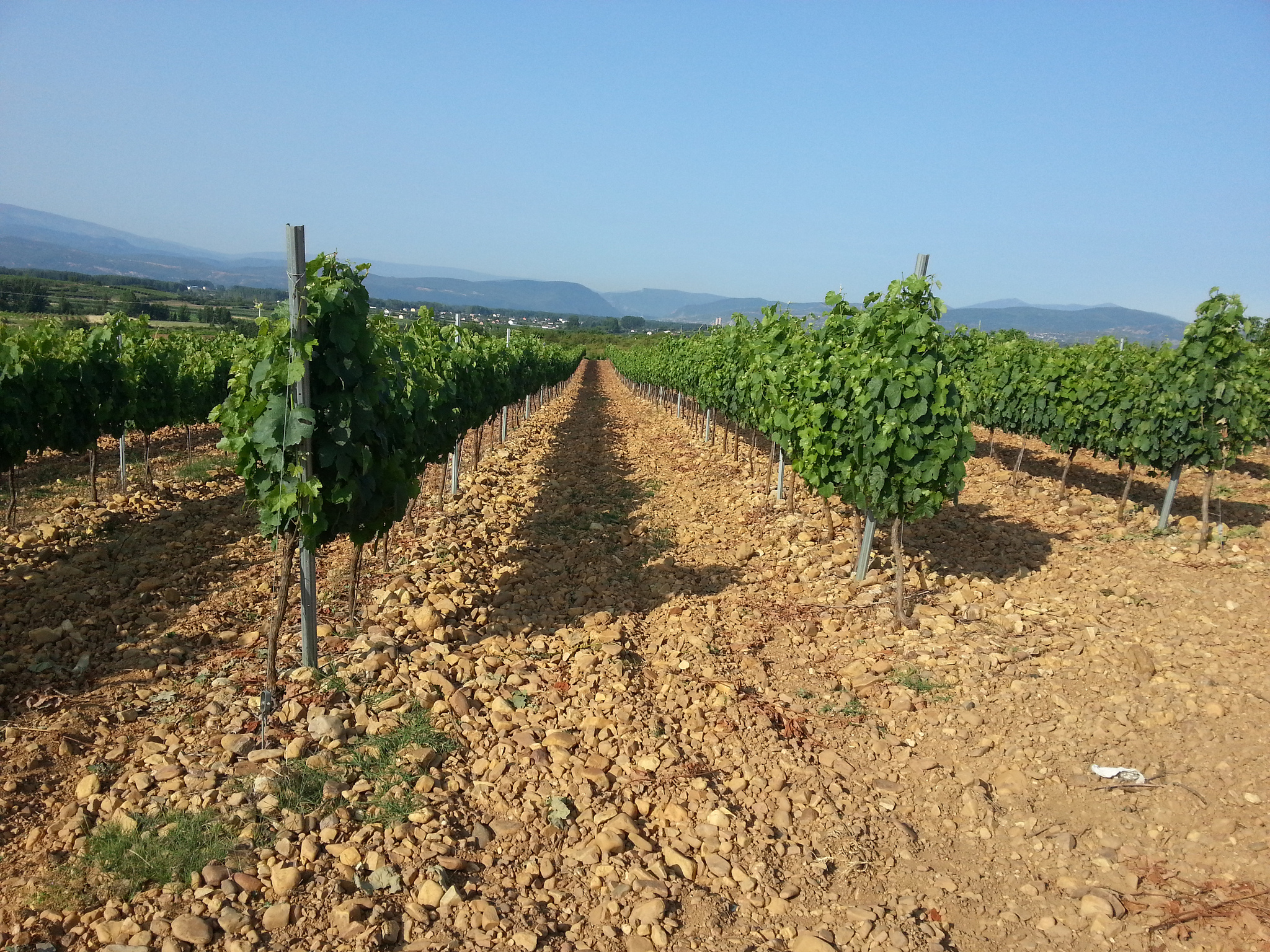
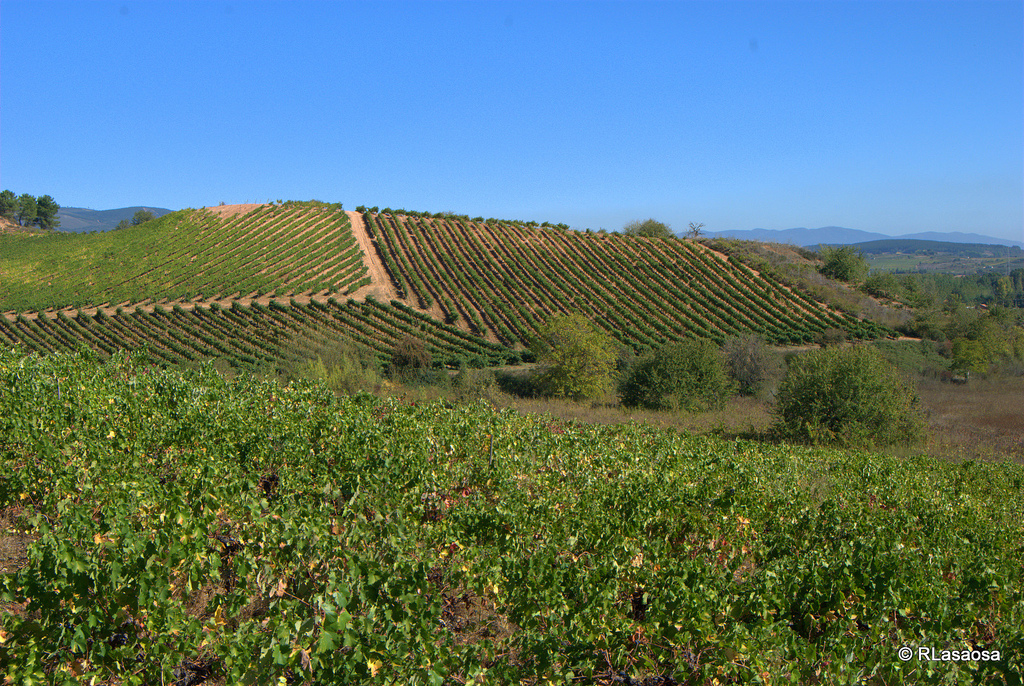
After crossing the A-6 motorway on an overpass, a wide dirt track between vineyards runs for nearly 3 km before descending to cross the A-6 again and entering Cacabelos. The Mencía grape that grows here produces some of the best red wine in northern Spain — lighter in structure than Ribera del Duero, more aromatic, with a freshness suited to the mountain climate. If you passed on the botillo in Ponferrada, this is the wine it was made for.
Cacabelos: under the archbishop of Santiago for eight centuries (km 16)
Cacabelos (km 16) has Roman origins — the settlement was called Bergidum Flavium in the imperial period — though the post-Roman centuries left it nearly depopulated. It appears in documents again in the 10th century with the name Cacabelos, whose etymology remains disputed.
The town has an unusual distinction in ecclesiastical geography: from 1108 until the 19th century, it was under the jurisdiction of the archbishop of Santiago de Compostela rather than the bishop of Astorga, whose diocese would normally have covered this territory. The reason is a piece of high medieval politics. In 1108, Diego Gelmírez — archbishop of Santiago, cathedral-builder, political operator of extraordinary ambition and one of the driving forces behind the expansion of the pilgrimage — ordered the construction of the church of Santa María in Cacabelos on what the bishop of Astorga considered his territory. The bishop objected strongly. The king adjudicated in Gelmírez’s favour. For the next seven centuries, Cacabelos paid ecclesiastical tribute to Santiago rather than Astorga. The episode illustrates how much power the archbishopric of Santiago had accumulated by the early 12th century — political, territorial and economic as well as spiritual.
The church of Santa María, still standing beside the Plaza Mayor, preserves its original Romanesque apse — the oldest surviving architectural element in the town — while the rest was rebuilt in the 16th century. The tower, which dominates the main facade, was built in the 20th century but designed in Romanesque forms, a deliberate continuity with the medieval original.
On the same street, the chapel of San Roque was dedicated to this saint in the 16th century when Cacabelos suffered a devastating epidemic. San Roque is the patron saint of plague victims — his legend involves both a pilgrimage to Rome and a plague he contracted and miraculously survived — making him the appropriate intercessor for a Jacobean town in crisis. The chapel houses a parish museum with 18th-century sacred art.
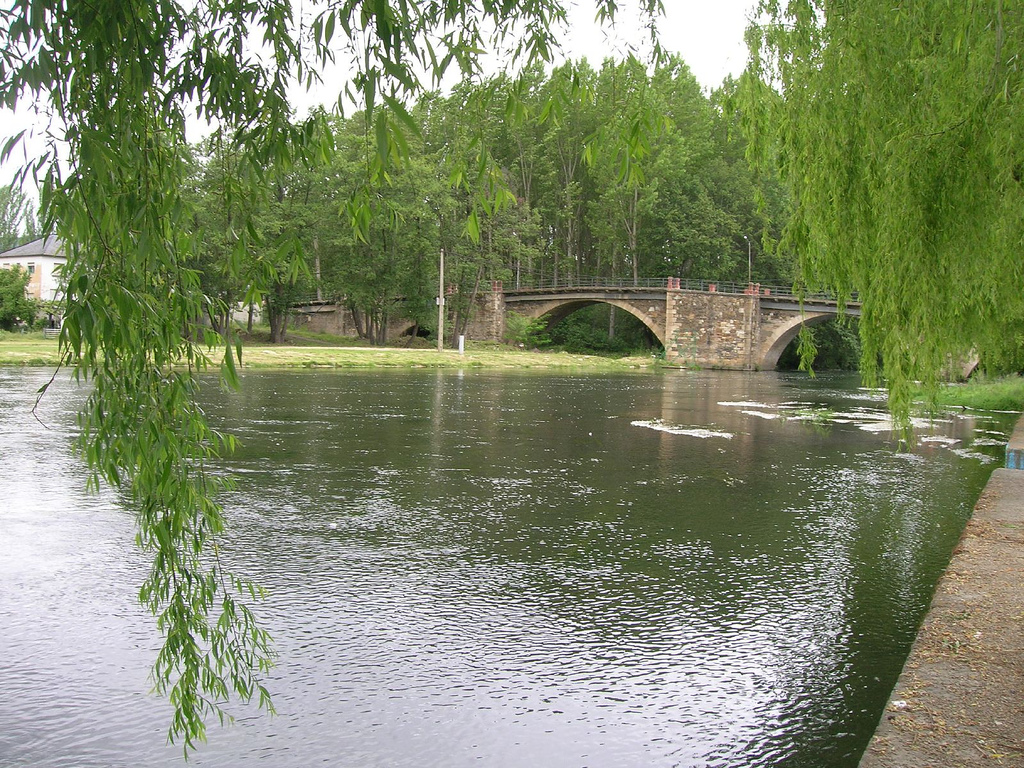
Cross the stone bridge over the Cúa River on the way out — a medieval structure that has been here in some form since the Camino’s 11th-century height, making Cacabelos one of the unavoidable crossings on the route. Then follow the LE-713 westward in a gentle climb toward Villafranca.
Villafranca del Bierzo: the Little Compostela (km 24)
From Pieros (a small village 2 km from Cacabelos) the road offers two routes to Villafranca: the LE-713 continuing straight (simpler, gentle downhill, turn onto a track before the junction), or an alternative via Valtuille de Arriba (adds 1.5 km, natural landscape, mixed dirt and gravel surface with some climbs). Both options are feasible on any bike type; the road variant is easier and faster.
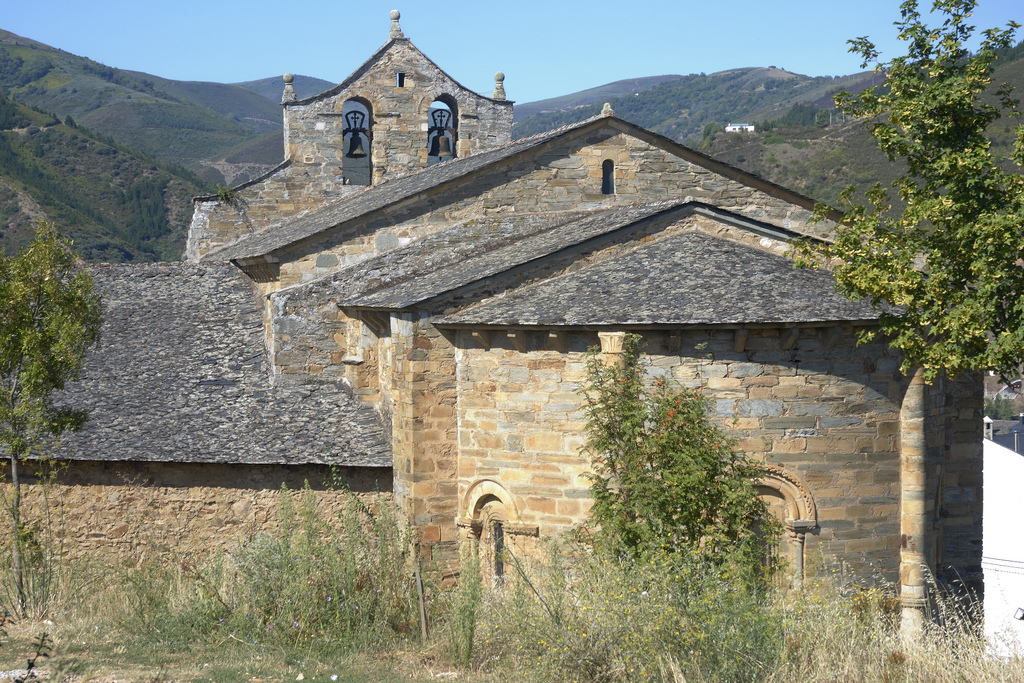
Villafranca del Bierzo (km 24) owes its existence, its name and most of its history to the Camino. In the 11th century the Order of Cluny — the great French Benedictine congregation that managed the pilgrimage infrastructure across the entire French Way, and which you encountered at Sahagún in Stage 8 — established a monastery here to provide services for pilgrims crossing into or out of Galicia. Around it grew the town. Villa francorum — town of the Franks — records the community of French merchants, craftsmen and monks who settled here, attracted by the trade that the Camino generated. The Cluniac monks were also among the first to cultivate vines in this area of El Bierzo, establishing a wine tradition that continues in the Mencía you saw in the vineyards outside Cacabelos.
The first building you see as you enter the town on the concrete track is the church of Santiago on the left. This church holds a privilege shared with only one other building in the world: since the 12th century, it has had the authority to grant the Jubilee indulgence — the full remission of sin associated with completing the pilgrimage to Compostela. The specific provision was made for sick pilgrims who could travel no further: those who were too ill to reach Santiago could cross through the Puerta del Perdón (Door of Forgiveness) of this church and receive the same spiritual credit as if they had made it to the cathedral. The door stands in the north wall — a Romanesque portal of exceptional sculptural quality, visually reminiscent of the Door of Forgiveness in Santiago itself. It opens only in Holy Years. This is why Villafranca del Bierzo is called “the Little Compostela”: it is the spiritual as well as geographical gateway to Galicia for the most vulnerable pilgrims. You need to have covered at least 150 km on foot to receive the indulgence.
The church itself is a single nave with a barrel vault and a semicircular apse, the architectural simplicity characteristic of 12th-century Romanesque pilgrimage churches — the building’s function was to serve, not to impress.
Continuing through the cobbled streets (uncomfortable for cyclists — go slowly), you pass the Castillo del Bierzo on the right: a 16th-century fortified palace, quadrangular, with four corner towers bearing the family shields of the noble house that built it. Not open to the public but imposing from the road.
Further along, on the Alameda Baja, is the Colegiata de Santa María de Cluniaco — the collegiate church that grew from the original Cluniac monastery. The original Romanesque building was abandoned in the 14th century as the pilgrimage declined; when the route revived two centuries later the decision was taken to rebuild entirely rather than restore. What you see is a Renaissance building of considerable quality — the spatial variety of its different sections reflects the successive campaigns of construction. Nothing survives from the 11th-century Cluniac foundation except the location and the mission.
Cross the bridge over the Burbia River to leave Villafranca. At the junction with the N-VI, look right: in 2016 the artist Raquel Montero created an outdoor installation called El Bosque Azul — the Blue Forest — in an area devastated by fire in 2015. She painted the charred trunks of hundreds of dead trees in vivid blue, transforming a landscape of desolation into something that is simultaneously melancholy and strange and beautiful. The paint weathers; some trees may still be blue when you pass, some faded to grey, some gone. It is one of the more unexpected encounters on the French Way.
The Valcarce valley: Pereje, Trabadelo and the portazgo (km 29–44)
From Villafranca the route follows the N-VI along the Valcarce river valley — the corridor through which the French Way has always passed into Galicia. The A-6 motorway runs above on enormous viaducts; you pass under them repeatedly, their scale emphasising how small the old road is by comparison. The traffic on the N-VI is light — most vehicles now use the motorway — and the surface is good.
Pereje (km 29) has a functioning bar. Trabadelo (km 33.5) is the first place where you will notice — if you listen carefully — that a number of people speak Galician rather than Castilian. This part of El Bierzo has always been culturally linked to Galicia rather than to the Castilian plateau; the administrative boundary does not map onto the linguistic and cultural one.
After a service station on the N-VI, a left-hand fork indicates Vega de Valcarce. Take it — this smaller regional road, the N-006A, runs along the floor of the valley beside the Valcarce River, quieter and more pleasant than the national highway. You pass through Ambasmestas (km 39) — a peaceful village with a pickle factory and a 19th-century cheese factory still in operation — before reaching Vega de Valcarce (km 40.5), the largest service point before the climb.
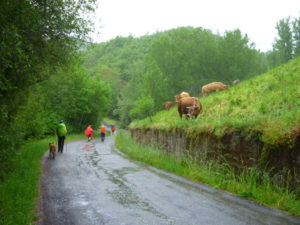
Vega de Valcarce is flanked by two castles on the surrounding hillsides. The more important one, the Castillo de Serracín, stands above the town. Its name records the nobleman who held it: Count Sarracino, whose family controlled the valley in the 10th century. The original construction was probably from around that period, though what survives — partial walls, a tower — dates mainly from the 14th century. It is not in pristine condition but its position above the river, with the mountains behind, is dramatic. In the town itself, a 19th-century watermill on the river has been restored; it still has its original machinery, moved by the current that runs under the building. Stock up here — there is nothing reliable between Vega de Valcarce and La Laguna de Castilla, 10 km further and 500 m higher.
From Vega de Valcarce the N-006A rejoins the N-VI for the approach to Ruitelán (km 42.5). The church of San Juan, with origins in the 13th century though substantially rebuilt in the 18th, contains a chapel dedicated to San Froilán — the patron saint of the diocese of León — that is worth a brief stop.
Froilán was a 9th-century priest who, after completing his theological studies, entered a spiritual crisis and retreated to a cave in the Bierzo mountains to live as a hermit. Local tradition locates that cave precisely where this chapel now stands. After years of isolation, Froilán decided to test whether his connection with God was genuine: he filled his mouth with burning embers. Finding himself unburned, he accepted the miracle as confirmation and ended his hermitage, spending decades afterwards preaching across El Bierzo and Galicia. The story belongs to a long tradition of extreme ascetic practice in Iberian Christianity — the hermit who tests faith through physical ordeal, the cave where the divine manifests, the subsequent mission to the people. San Froilán’s feast day, 5 October, is still the festival day of León.
A short distance past Ruitelán on the N-VI, a pronounced left turn onto the CV-125/1 road enters Las Herrerías (km 44): the foot of the climb.
Las Herrerías: the last village before Los Ancares (km 44)
Enter Las Herrerías on a single-arch Roman bridge, restored but ancient. The town’s name is entirely descriptive: herrerías means forges. In the Middle Ages there were four smithies here, working with ore from the surrounding mountains, which made the village an important commercial hub in a valley that had little else to offer industry. One of the original forges has been preserved with its tools in a building called A Casa do Ferreiro — the Blacksmith’s House — a small museum of a craft that shaped the settlement’s identity for centuries. The shift from Castilian to Galician in the name (*ferreiro* rather than *herrero*) signals how close to the border you are.
Fill your bottles here. The ascent begins immediately at the village exit.
The climb to O Cebreiro: the hardest ascent on the French Way (km 44–52)
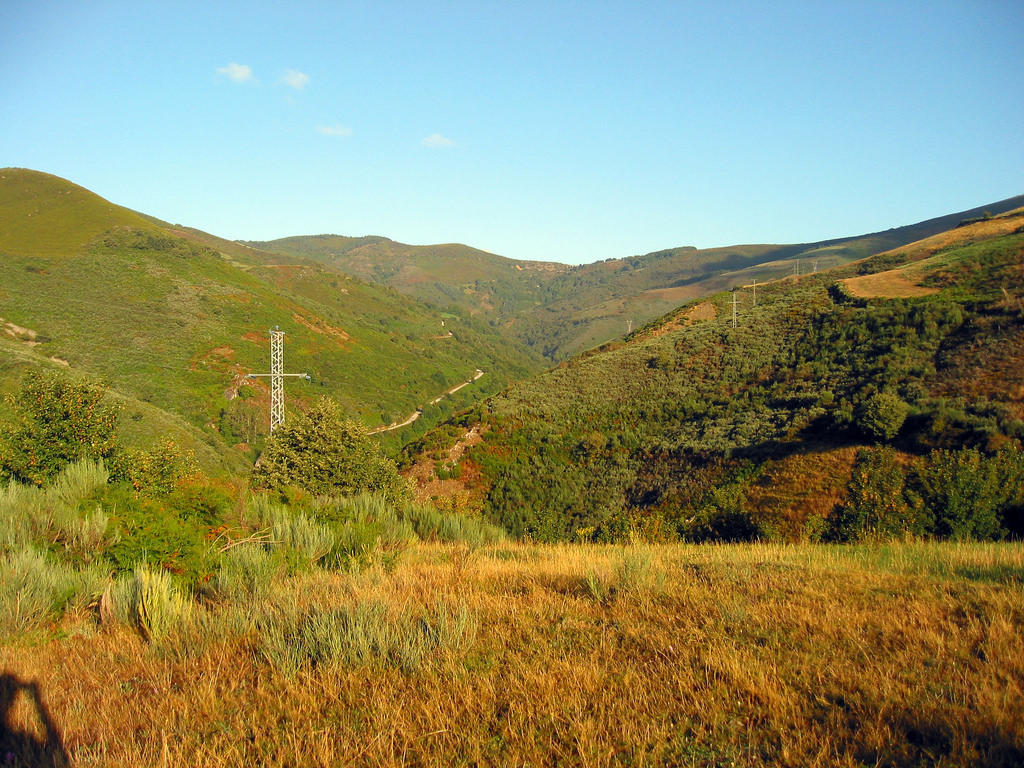
The ascent from Las Herrerías to O Cebreiro is 8 km with approximately 650 m of elevation gain — gradients ranging from 7% to 25%, with no flat sections for recovery. For anyone who crossed the Pyrenees on Stage 1, the comparison is direct and apt: this is the other great climb of the French Way, with a different character — no single brutal push, but a sustained effort with variable intensity that gradually depletes the legs.
Road only from Las Herrerías to O Cebreiro. The CV-125/1 is the only safe route for cyclists. The pedestrian Camino follows trails that are narrow, stony, steep and in places vertiginously close to the hillside. Some experienced cyclists attempt them; the combination of surface and gradient means most push their bike for significant sections, and the risk of falls is genuine. The road is not heavily used, has good surface, and in fact has less severe maximum gradients than the trail on several sections. Follow it throughout.
The key junction: 2 km from Las Herrerías, a sign painted on the road marks a fork for cyclists, directing you right toward La Laguna de Castilla rather than left toward La Faba. Take the right fork. La Faba is served only by the pedestrian trail from that point forward — entering it means either pushing your bike or backtracking.
The right fork climbs steadily to La Laguna de Castilla (km 50) — the last village in Castile and León, at 1,165 m altitude, with 25 inhabitants. The name is appropriate: it means the Lagoon of Castile, the puddle at the far edge of a vast region. The views back down the valley and across to the mountains of Galicia from here are substantial — pause and look.
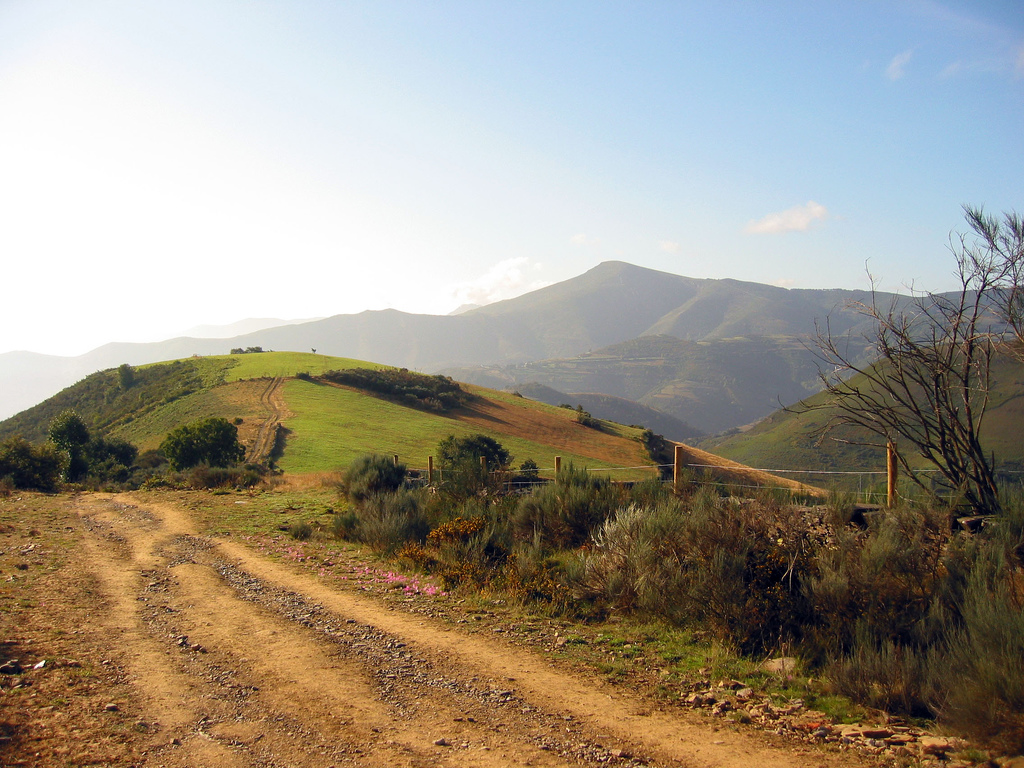
At the exit of La Laguna a stone milestone marks the Galician border on the pedestrian path to the left. The asphalt track continues parallel at slightly higher elevation, without the milestone but with significantly better surface. Stay on the road; if you want to see the border stone, leave your bike and walk the 100-metre descent to the path and back.
One kilometre after the border: O Cebreiro.
A practical note about the Camino de Invierno: from Ponferrada a second official Camino branches south, bypassing Los Ancares entirely. Called the Camino de Invierno (Winter Way), it was formally recognised as an official Jacobean route in 2016 precisely because the weather in the Ancares and the mountains of Lugo can make the standard route genuinely impassable in heavy snow. It enters Galicia via Ourense and passes through the Ribeira Sacra wine region before joining the Vía de la Plata near Santiago. If you are making the journey between November and April and snow is forecast, this is a legitimate and beautiful alternative — not a defeat.
When you arrive: O Cebreiro
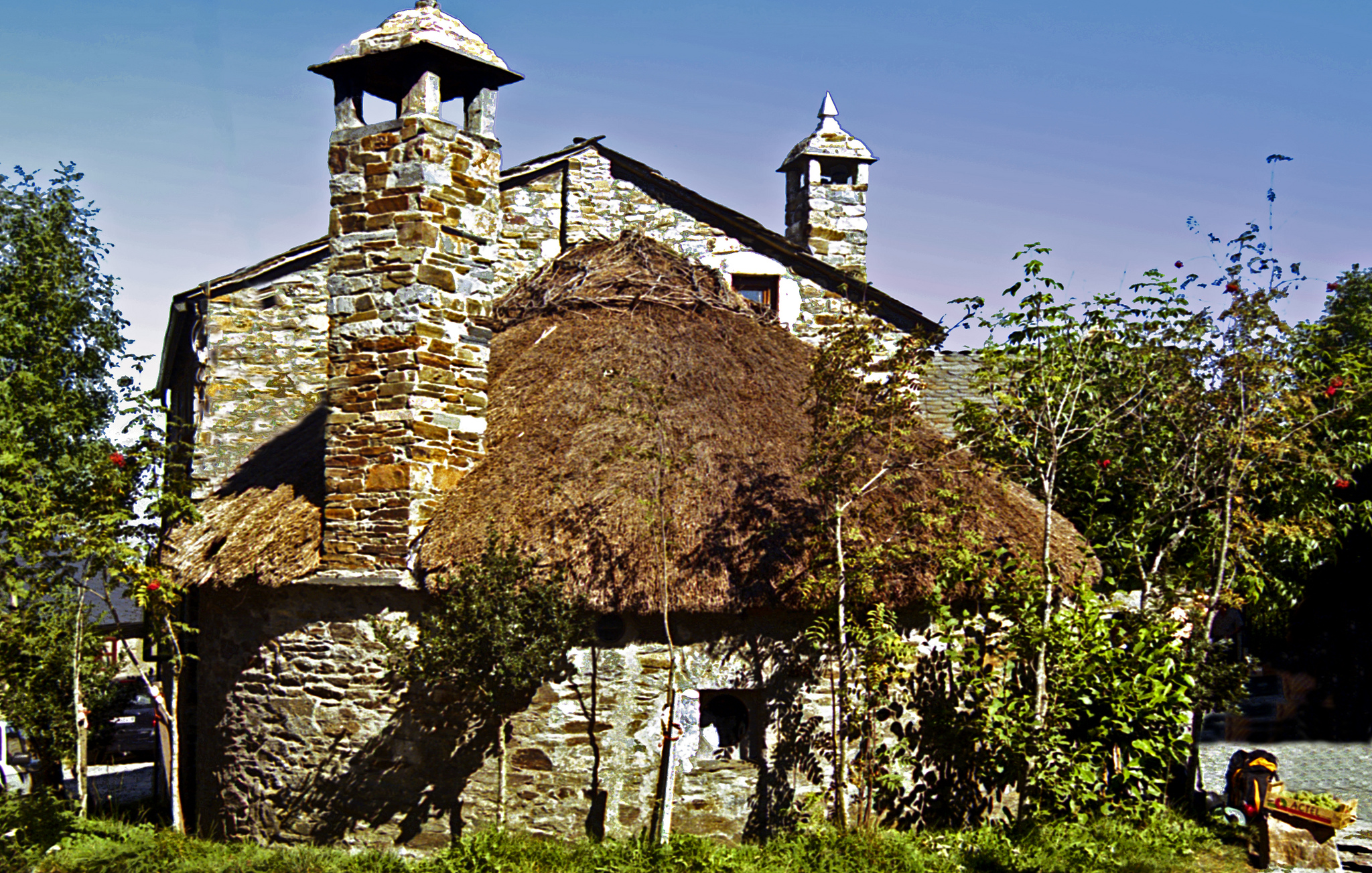
O Cebreiro is very small — a handful of buildings, a hostel, a few restaurants, a church — but its scale is inversely proportional to its significance. This is the gateway to Galicia, the first settlement beyond the mountains, and a place that has been sheltering pilgrims since before the Camino existed in its current form. In good weather the views are extraordinary. In mist — which is frequent here, the mountains catching cloud off the Atlantic — the village has a quality of elsewhere that is unlike anywhere else on the route.
The pallozas: living in the pre-Roman way
The most visually striking feature of O Cebreiro are the pallozas — large, oval or circular stone structures with thatched roofs, indistinguishable from the Celtic round houses that were the standard dwelling form in the Atlantic arc of Europe before the Roman conquest. These are not reconstructions or museum pieces: pallozas were still being used as combined human and animal dwellings in some Galician mountain communities into the 20th century. The ones at O Cebreiro have been maintained as a museum complex, with traditional furnishings and tools, but they sit in the middle of the village as naturally as any other building — which is the point. The architectural tradition they represent is over two thousand years old and survived in this remote mountain location long after it had disappeared from everywhere else.
The church of Santa María la Real: the oldest in Galicia
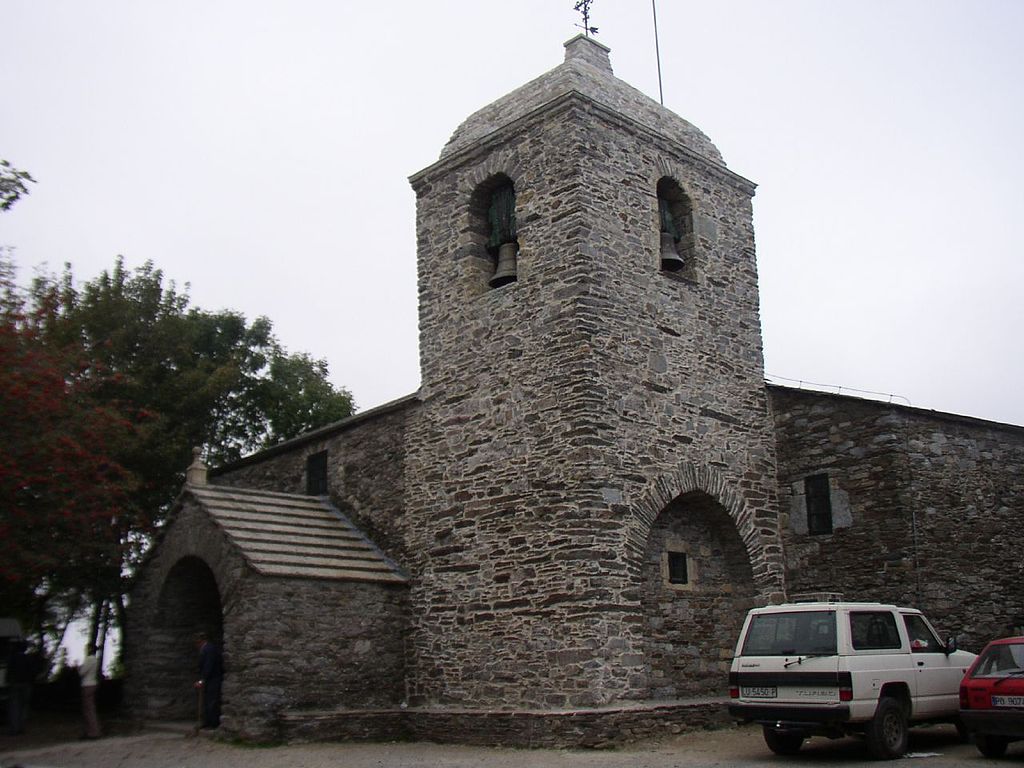
The pre-Romanesque church of Santa María la Real is the oldest church in Galicia. Its origins go back to the 9th century, when a Benedictine monastery was established here — one of the earliest Christian foundations on the Galician side of the mountains, serving both the sparse local population and the first organised streams of pilgrims heading for the tomb of Santiago. The current building retains pre-Romanesque fabric in its walls and structure, with later modifications that respected the original scale and character.
Inside the church is preserved a chalice and paten of extraordinary historical significance — the Chalice of O Cebreiro, a Romanesque piece from the 11th or 12th century that became the basis of the greatest legend in Galician culture: the Holy Grail of O Cebreiro.
The legend: during a fierce snowstorm, a devout peasant from the village of Barxamaior walked hours through the blizzard to attend mass at the monastery church. The monk officiating was irritated by the effort — why had this man come so far in such weather for a mere piece of bread? At that moment, as he spoke the words of consecration, the bread and wine transformed visibly into flesh and blood in the chalice and paten. The monk repented immediately. The chalice and paten that witnessed this miracle were preserved at the church and became objects of immense veneration.
The legend reached the ears of King Ferdinand and Queen Isabella — the Catholic Monarchs — who visited O Cebreiro in 1486 and donated a replica of the reliquary to house the chalice more fittingly. Whether or not you credit the miracle, the Chalice of O Cebreiro passed into the cultural mythology of Galicia so completely that it is represented on the coat of arms of Galicia: the chalice and the paten appear on the Galician flag to this day. The object is physically there, behind glass in the church. You can stand in front of it.
Gastronomy and overnight in O Cebreiro
O Cebreiro is very small and fills up in summer. The few restaurants and the hostel can reach capacity quickly. If it is full, Liñares (3 km further along the road) has a smaller hostel, and Piedrafita do Cebreiro (3.5 km beyond Liñares) is a larger town off the main route with better accommodation options.
The food in Galicia begins here and it is a significant improvement on everything you have eaten since the Pyrenees. The caldo gallego — Galician broth — is the first thing to order: a deep, fortifying soup of turnip tops, white beans, potatoes and a ham hock, made to warm people who live in a wet mountain climate. It is exactly the right thing after 8 km of climbing. Beyond the caldo: Galician octopus (pulpo á feira), lacón (cured pork shoulder), and in the morning, a coffee with a shot of orujo. You are in Galicia now. Everything is different from here.
Practical notes for Stage 11
The O Cebreiro climb: the essential advice
The ascent from Las Herrerías takes 8 km and gains 650 m. Gradients reach 25% at points. The key rule: start slowly and maintain a constant pace. There is no flat section where you can recover; if you push too hard in the first 2 km you will be walking before La Faba. Adjust your gears before leaving Las Herrerías — your smallest chainring and your largest sprocket. Carry at least 1 litre of water. Follow the CV-125/1 road throughout; do not take the pedestrian trail. Traffic on the road is minimal.
Weather on Los Ancares
O Cebreiro sits at 1,302 m in a mountain range that catches the full force of Atlantic weather systems. From October to May, snow, dense fog and severe wind are common. Even in summer, the mountain can be in cloud while the valley below is clear. Check the weather before leaving Ponferrada and again before leaving Vega de Valcarce. Carry a wind and waterproof layer regardless of morning conditions — the temperature at the top can be 15°C colder than the valley.
Water and supplies
Services are regular from Ponferrada to Vega de Valcarce — every 5–7 km. After Vega de Valcarce there is nothing reliable until La Laguna de Castilla (km 50), 10 km and 500 m of climbing away. Fill your bottles in Vega de Valcarce before the final section. There is nothing between La Laguna and O Cebreiro except the road.
Surface and bike type
The first 44 km to Las Herrerías alternate between asphalt tracks, concrete road and the N-VI shoulder — comfortable on any bike. The vineyard track near Camponaraya is wide dirt, manageable in dry conditions, muddy in rain. The O Cebreiro climb (CV-125/1) is good asphalt throughout. The pedestrian trail alternatives should not be taken on any bike type on the climbing section. An e-bike is strongly recommended for the O Cebreiro ascent unless you are a confident and fit climber — the gradients are sustained and there is no recovery.
Starting in Ponferrada
Ponferrada is on the A-6 corridor — the main road between Madrid and Galicia — and well served by Alsa buses from all major Spanish cities. It is also a significant railway junction: Renfe has connections to León, Galicia and beyond. No airport; the nearest is in León. Tournride delivers bikes to your accommodation in Ponferrada the evening before your departure. Note that the SEUR office for alternative bike collection is closed at weekends.
Frequently asked questions about Stage 11
How far is Stage 11 of the Camino Francés by bike?
52 km from Ponferrada to O Cebreiro. The stage has two very different characters: the first 44 km across the Valle del Bierzo are straightforward on mostly flat or gently rolling terrain; the final 8 km from Las Herrerías to O Cebreiro are a sustained mountain climb with gradients to 25%. Allow 5–7 hours total including the climb.
Is the O Cebreiro climb dangerous for cyclists?
On the road (CV-125/1), no — it is demanding but not dangerous. The road has low traffic, good surface and the gradients, while steep, are rideable. The pedestrian trail is a different matter: narrow, rocky, with sustained gradients near 15% average and sections close to hillside drops. Never take the pedestrian trail on a bike. Follow the road the entire way.
What is the Puerta del Perdón in Villafranca del Bierzo?
The Door of Forgiveness — a Romanesque portal of the church of Santiago in Villafranca del Bierzo that has, since the 12th century, shared the privilege of granting the Jubilee indulgence with the cathedral of Santiago de Compostela. Sick pilgrims who could travel no further could cross this threshold and receive the same spiritual credit as completing the pilgrimage. The door opens only in Holy Years. It is the reason Villafranca is called “the Little Compostela.”
What is the Holy Grail of O Cebreiro?
A Romanesque chalice and paten preserved in the church of Santa María la Real in O Cebreiro, associated with a medieval miracle legend in which a devout peasant who walked through a blizzard to attend mass witnessed the bread and wine transforming visibly during consecration. The chalice became an object of royal veneration — visited by Ferdinand and Isabella in 1486 — and eventually of national significance: the chalice and paten appear on the coat of arms of Galicia and on the Galician flag to this day.
Where can I sleep in O Cebreiro?
O Cebreiro itself is tiny and fills up fast in summer — arrive early. If full: Liñares (3 km further along the road) has a small hostel, and Piedrafita do Cebreiro (3.5 km beyond Liñares, just off the main route) has more accommodation options. All three work well as overnight stops before Stage 12.
Can I rent a bike in Ponferrada and return it in Santiago?
Yes. Tournride delivers your bike to any accommodation in Ponferrada the evening before your departure and collects it in Santiago de Compostela when you finish. Luggage transfer in a single leg, from the start to the end of the trip, is also available. See all bike models and check availability here.
Cycle the Camino de Santiago at your own pace.
Plan this stage by bike