STAGE 10: FROM ASTORGA TO PONFERRADA
Erea FabeiroStage 10 is where the Camino finally changes. After five stages of the Castilian Meseta — flat, exposed, immense — you climb out of the plains into the mountains of León, cross the highest point on the entire French Way at the Cruz de Ferro, and descend into El Bierzo: a natural amphitheatre of river valleys, vineyards and chestnut forests enclosed by mountains, geographically and culturally distinct from everything you have passed through since the Pyrenees. The stage is physically demanding — 54 km with nearly 900 m of climbing and a technical descent from the pass to Molinaseca that requires care — but the rewards are proportionate. By the time you arrive in Ponferrada, you will have experienced one of the great transformations of the French Way.
Planning the full route? Our planning to cycle the Camino de Santiago page maps every stage, with distances and planning tips.
| Distance | Elevation gain | Estimated time | Difficulty | Distance to Santiago |
|---|---|---|---|---|
| 54 km | +900 m cumulative | 5–6 hours riding | 🔴 High | ~256 km |
Rent your bike for the Camino: from €22/day (conventional bike) or €33/day (e-bike) on a one-week trip. 2027 rates, bike transport not included.
See availability and priceKey stops: Castrillo de los Polvazares (km 5) · Rabanal del Camino (km 20) · Cruz de Ferro (km 28) · El Acebo de San Miguel (km 36) · Molinaseca (km 45) · Ponferrada (km 54)
Optional detour: Las Médulas (+~25 km from Ponferrada — Roman gold mine, UNESCO World Heritage, one of the most spectacular landscapes in Spain)
Route profile and key milestones
Leaving Astorga: the chapel of the Ecce Homo (km 0–5)
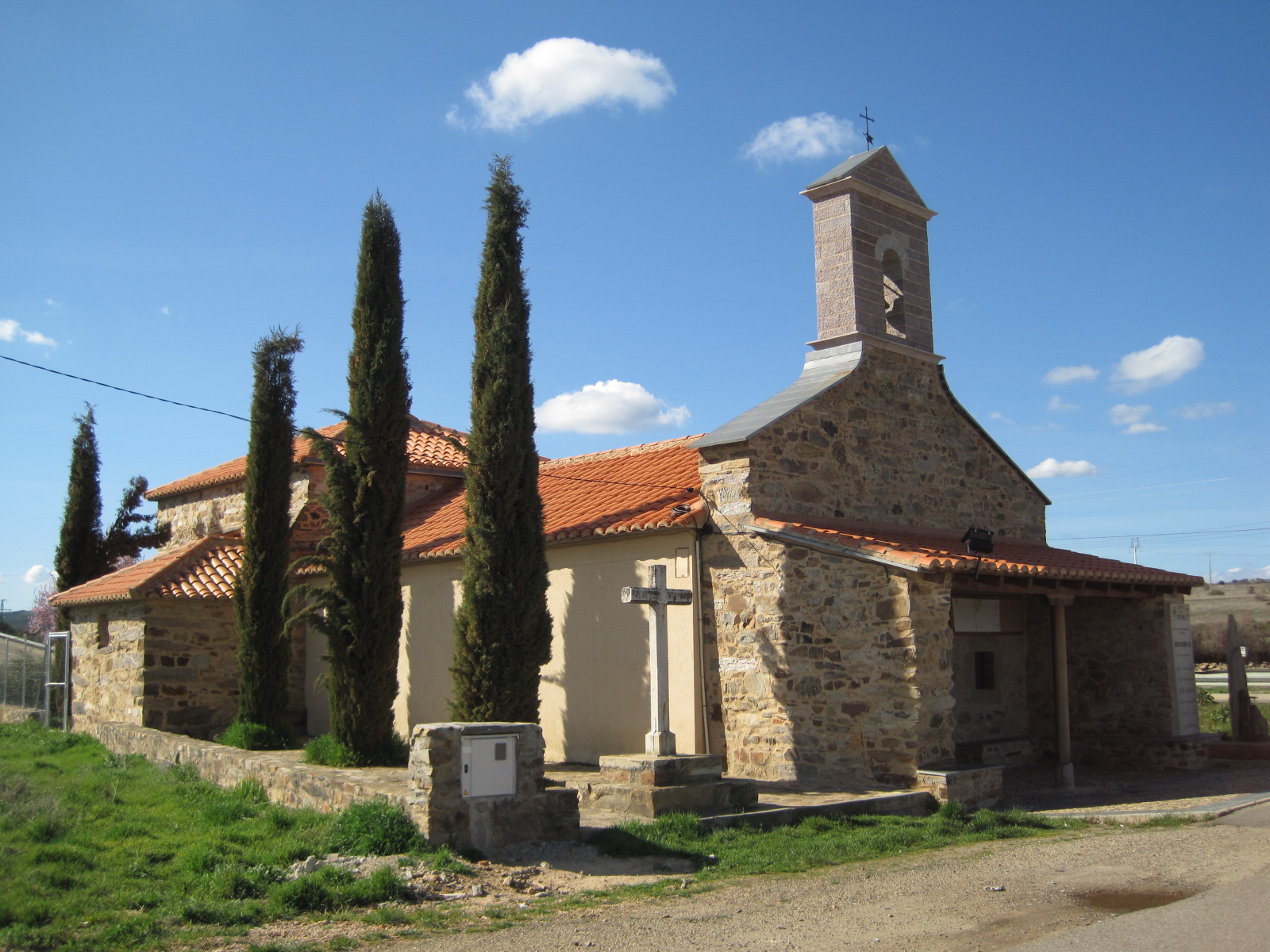
From the cathedral, take Calle Portería to the first right, follow San Pedro Street to a roundabout, cross the N-VI via a pedestrian overpass, and join the LE-142 — the road that will be your companion for virtually the entire stage. The exit from Astorga is much cleaner than the exits from León or Burgos: you are on the open road almost immediately.
After crossing the A-6 motorway on an elevated pass (km 1.7), you pass the detour to Valdeviejas and, almost immediately, the chapel of the Ecce Homo on the right. A sign on its door reads “La Fe, fuente de salud” — Faith, a health source — in several languages. The legend behind the dedication: a child fell into the well inside the chapel and was drowning. His mother begged the Ecce Homo image for help until the child was able to get out. In gratitude, the chapel’s dedication was changed from San Roque to the Ecce Homo — the suffering Christ that Pontius Pilate presented to the crowd after the torture, with the words “Ecce Homo!” — Behold the man. It is a representation of Christ at his most human: suffering, mortal, capable of compassion toward a drowning child.
The Maragato towns: Murias, Castrillo and Santa Catalina (km 3–15)
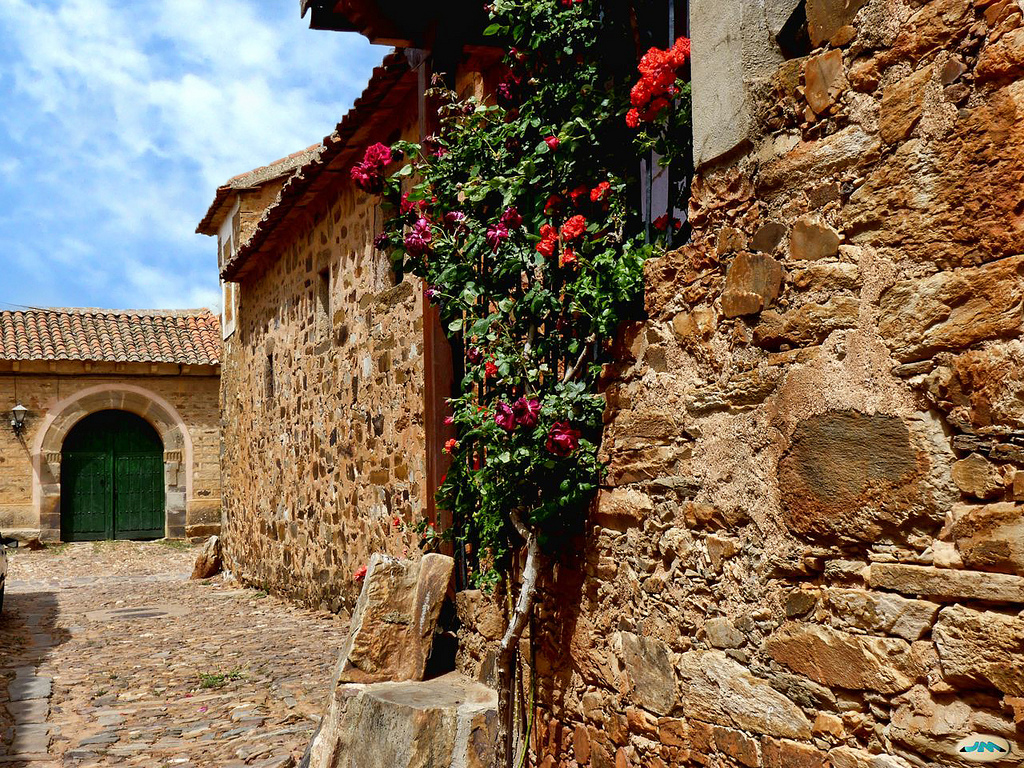
At km 3.5 you reach Murias de Rechivaldo, where the Jacobean path turns left off the LE-142. At the junction you face a choice: follow the path (which passes through the village and rejoins the road) or continue straight on the LE-142 and make a brief detour north to Castrillo de los Polvazares.
Castrillo is worth the 2 km detour. Declared a Historic-Artistic Site in 1980, it is considered the most beautiful Maragato village in Spain and one of the most perfectly preserved examples of traditional rural architecture on the entire Camino. The main street — paved in 17th-century stone, still intact — was designed for mule drivers: wide enough for a loaded carriage, flanked by stone houses with characteristically oversized double-leaf gates to accommodate the beasts and their loads. The stone used throughout is the warm ochre of the local mountains; window and door frames are painted in contrasting white or cream; the overall effect is of a settlement that has not been restored so much as simply left alone.
The Maragato architecture you see in Castrillo, Murias and the villages that follow — stone masonry, large central courtyards, the prominent gates — reflects the specific requirements of the arriero trade. These were professional transporters who carried goods on mule trains from Galicia’s Atlantic ports to Madrid and the interior, establishing one of the most organised commercial networks in pre-industrial Spain. They were the people who brought cocoa back from the American ports to Astorga in the 17th century, creating the chocolate tradition. Their houses were built around their work.
Back on the LE-142 and on the small LE-6304 that branches off it, three parallel routes run through this section — the two-lane road, a gravel pedestrian track and an agricultural dirt track — between which you can choose freely. The profile is almost flat.
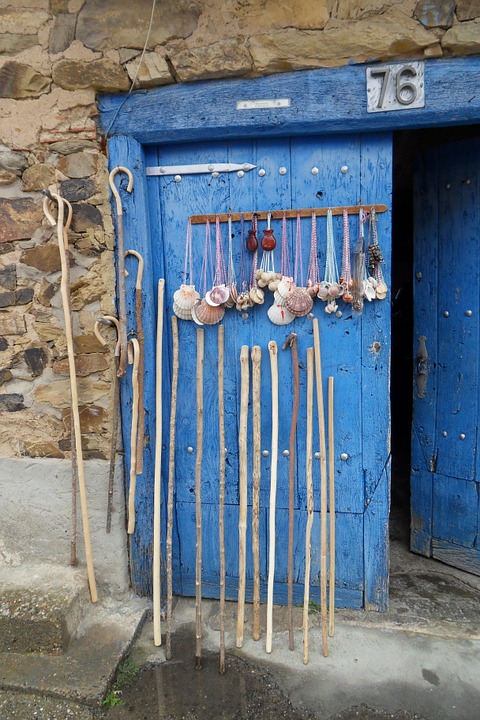
Santa Catalina de Somoza (km 12) is another Maragato village of the same character. Its main street follows the Camino east-west, as in all Jacobean villages. The most notable resident of recent decades was Bienvenido Merino, a craftsman who spent thirty years carving wooden souvenirs for pilgrims while conversing with anyone who paused. He met Paulo Coelho when the Brazilian writer walked the Camino in the 1980s, invited him in for a drink, and months later, when Coelho published The Pilgrimage, he received a signed copy by post. Some editions of the book use a photograph of Bienvenido’s blue front door — hung with the scallop shells he sells — as the cover image. The blue door is still there.
El Ganso, the Pilgrim’s Oak and Rabanal del Camino (km 15–20)
Following the LE-6304 for 4 km you reach El Ganso, another small Maragato village. A few kilometres further, a crossroads marks the junction toward Rabanal Viejo; just beyond it, an explanatory board and a stump commemorate the Roble del Peregrino — the Pilgrim’s Oak — a landmark tree that stood by the road for decades and was uprooted in a storm in 2013. The Camino accumulates these places: a tree that is no longer there, a door that is still there, a man who spent thirty years talking to strangers.
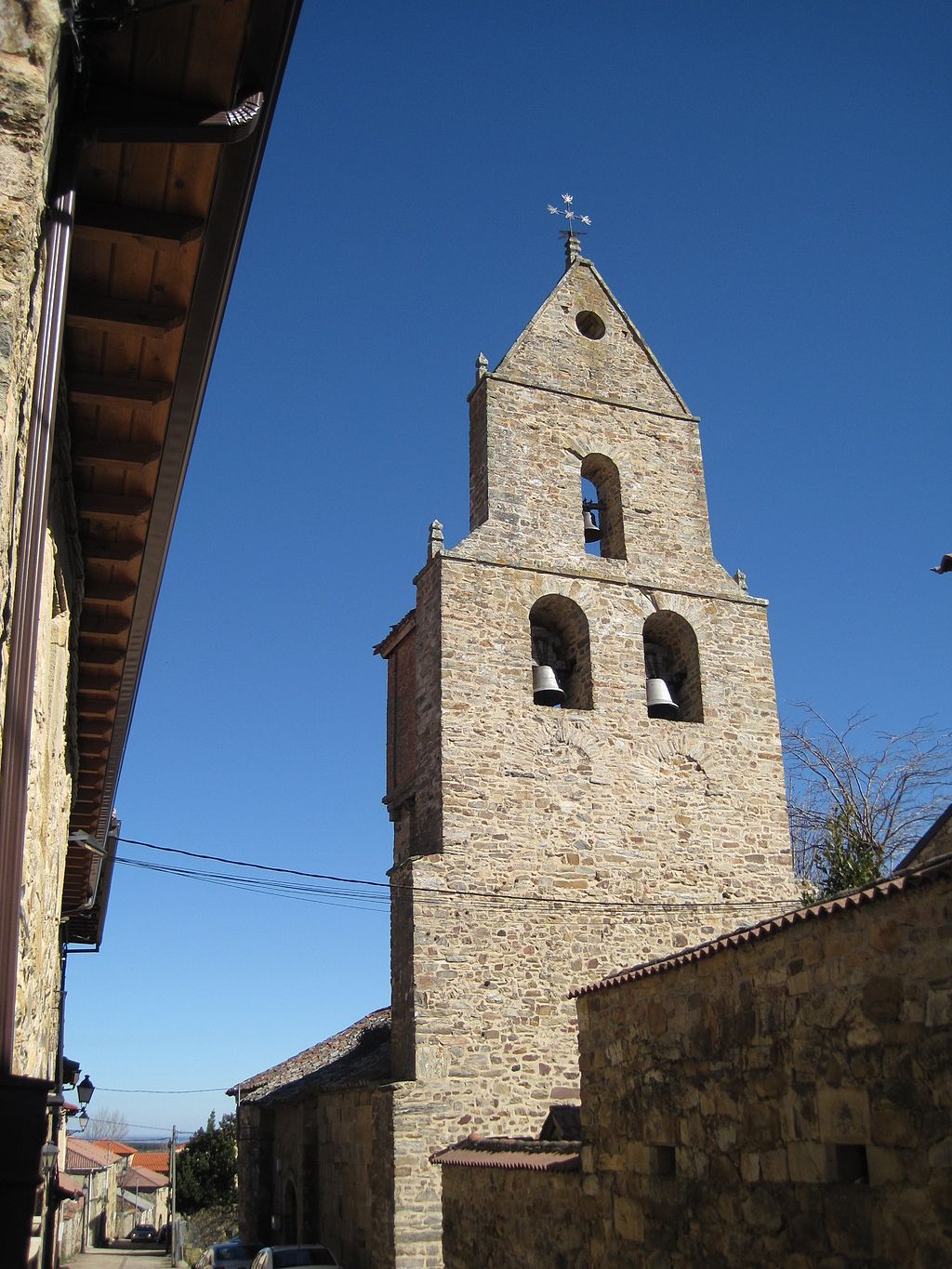
Shortly after, on the road’s left, is the chapel of the Vera Cruz (18th century), now adjacent to the cemetery. Then you arrive at Rabanal del Camino (km 20), where the Camino has been a significant stop for centuries.
Rabanal has Templar history: the Order used it as a forward base for their main headquarters at Ponferrada, specifically to provide protection on the mountain crossing — the section most feared by medieval pilgrims for its weather, its terrain and its bandits. Their legacy is visible in the parish church of Nuestra Señora de la Asunción, promoted by the Order in the 12th century and one of the few surviving Romanesque churches in León. The building has been restored and is maintained by a German Benedictine community based here since the 1990s, who perform Gregorian chant at Vespers — if you time your passage right, you can hear it.
The village also has a literary distinction: Aymeric Picaud cited Rabanal as a specific overnight stop in his 12th-century Codex Calixtinus — the first Camino guidebook. And, according to local tradition, Philip II slept here on one of the houses of the Calle Real (the old royal road) when he made his own pilgrimage to Compostela. Whether you believe the Templar stories, the royal overnight or Picaud’s attestation, Rabanal is a place with demonstrable Jacobean history across ten centuries.
The village’s old part is above the LE-142 level — the road runs along the southern edge at lower height. To visit the church and the Calle Real properly you need to leave the road and climb briefly. Worth doing before the long ascent ahead.
The climb to Cruz de Ferro: Foncebadón and Monte Irago (km 20–28)
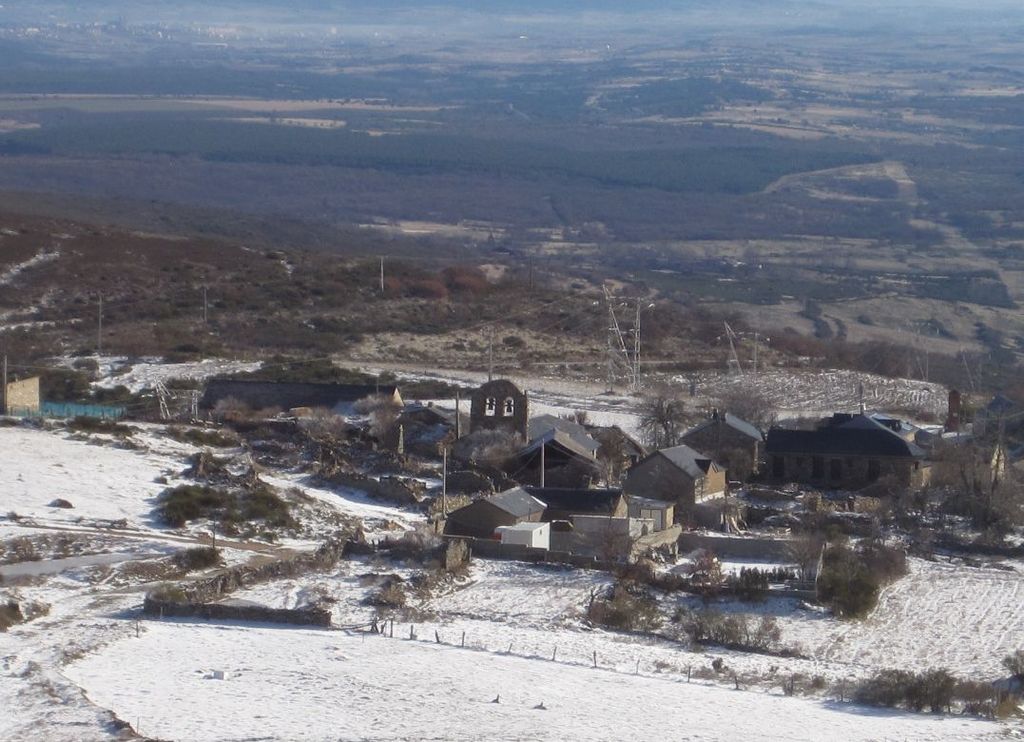
After Rabanal the gradient changes. The road climbs steadily with average gradients of 4–5.5% for the remaining 8 km to the Cruz de Ferro. The landscape shifts: the ochre stone villages give way to open mountain, the scrub and heather of the Montes de León, and on clear days the views behind you extend back over the plains all the way to Astorga. Keep to the road shoulder from here — the pedestrian trail is sometimes narrow and rocky, and from Manjarín onward becomes genuinely dangerous for bikes.
Foncebadón (km 26) is a village that was abandoned in the 1960s when its last inhabitants left for the cities. Pilgrims who walked the Camino in the 1970s and 1980s describe it as an unnerving place — roofless houses, semi-wild dogs using the ruins for shelter, the atmosphere of a settlement that had been forgotten. With the revival of the Camino in the 1990s, Foncebadón began very slowly to recover. Residents returned, a hostel opened, services appeared. Today it is on its way back, though it retains the slightly raw quality of a place that was recently nothing.
The village’s original foundation is attributed to a hermit named Gaucelmo, who settled here in the 11th century and built a pilgrim hospital and a church. The location was strategically important — the final difficult mountain section — and was dangerous. Gaucelmo’s work on behalf of pilgrims impressed King Alfonso VI enough that he ceded the lands to the hermit. Gaucelmo is also credited with erecting the Cruz de Ferro, for the same reason he came here: to help pilgrims find their way through the mountains.
Cruz de Ferro: the highest point on the French Way (km 28)
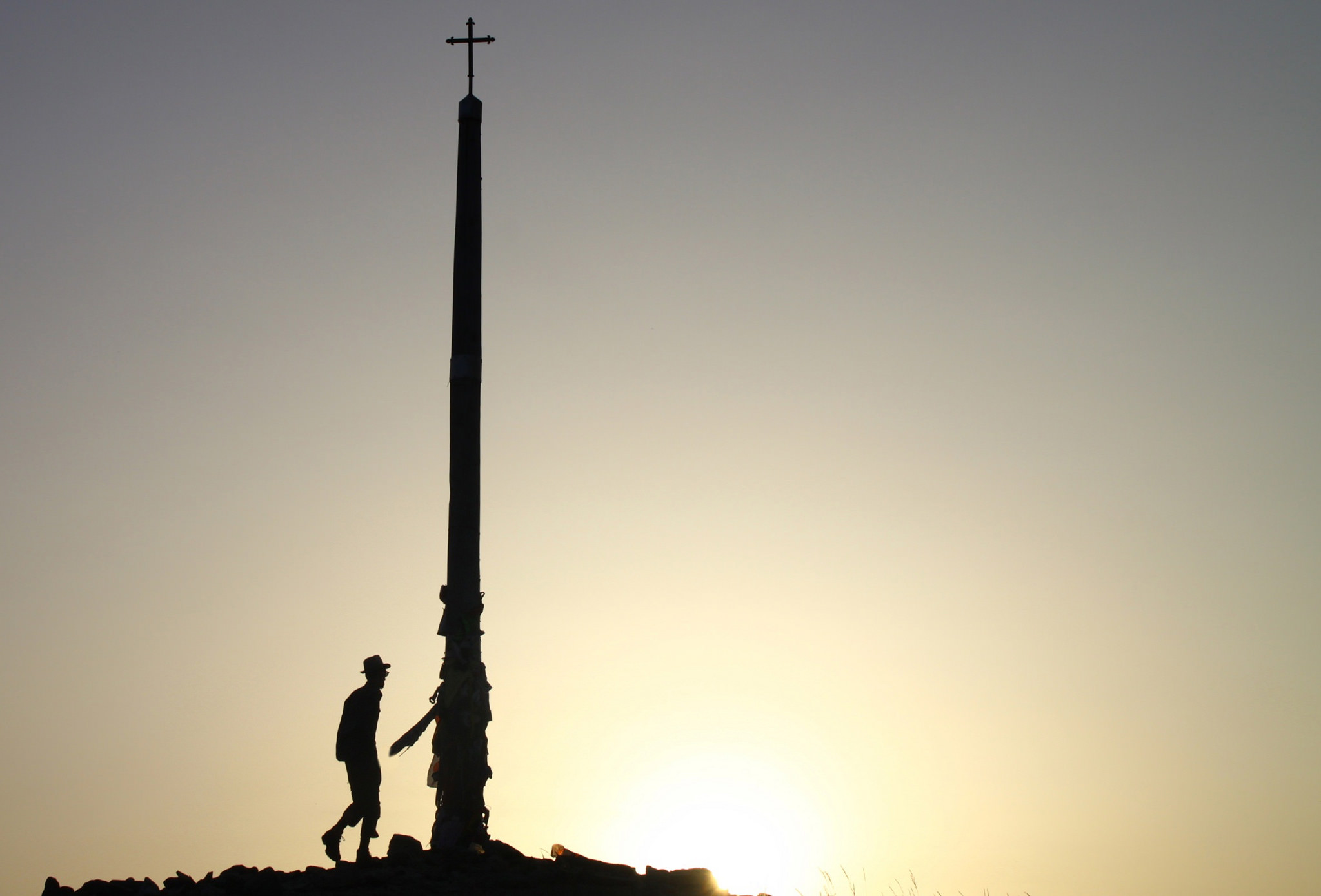
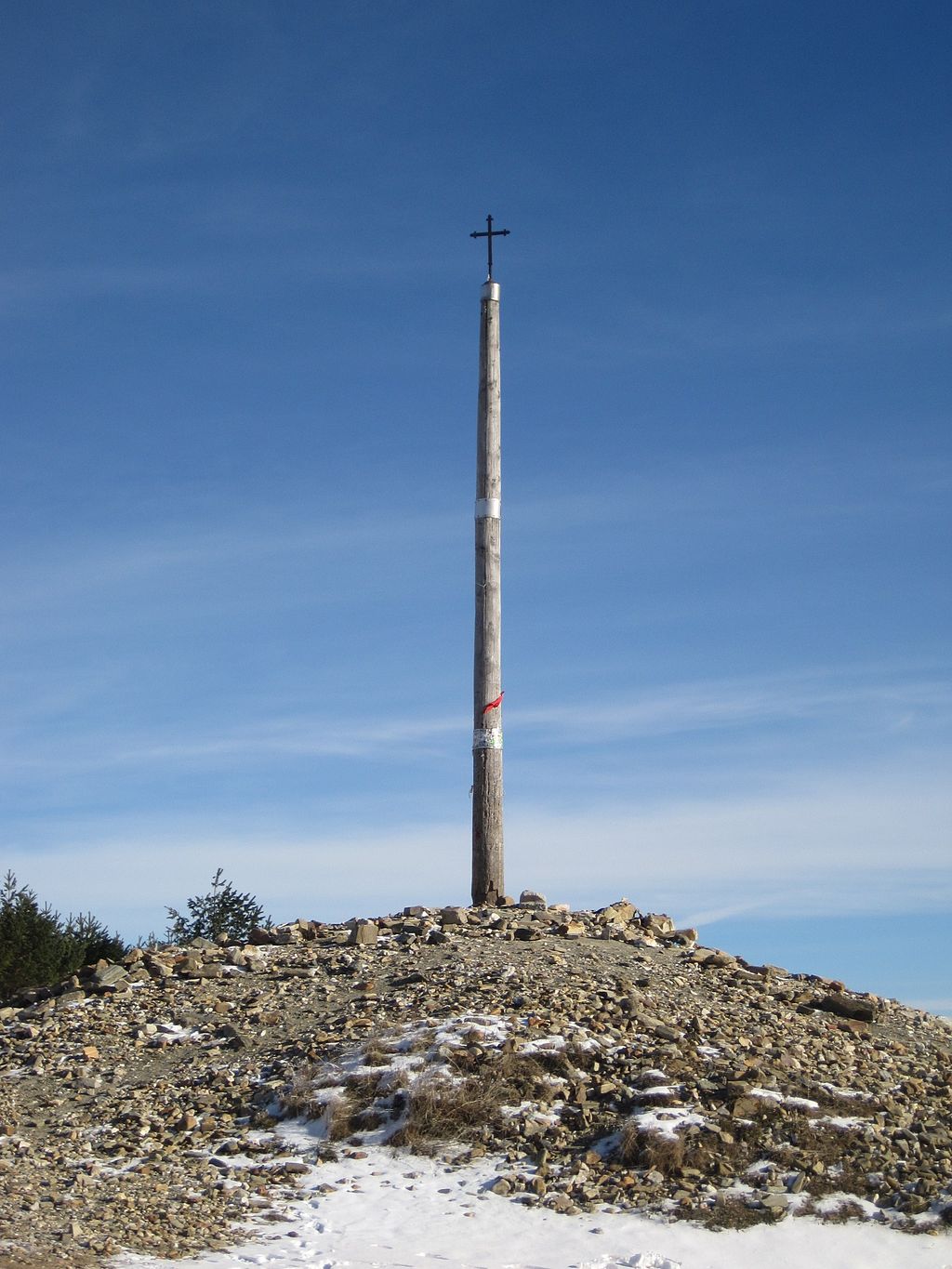
The Cruz de Ferro stands at 1,502 m on the summit of Monte Irago — the highest point on the entire French Way. The iron cross itself is mounted on a wooden pole 5 metres tall and surrounded by a vast cairn of stones brought here by pilgrims from every part of the world since the beginning of the pilgrimage. The stone you carry from home and leave here is the physical expression of the burdens you came to lay down: worries, grief, intentions, thanks. The pile grows continuously, and its scale — thousands of stones accumulated over centuries — makes it one of the most quietly powerful moments on the Camino.
The cross Gaucelmo placed here in the 11th century is not what you see today — the original is now at the Museo de los Caminos in Astorga’s Gaudí Palace, which you visited on Stage 9. What stands here is an exact replica. But this does not diminish the place: the tradition it embodies is continuous, and the view from the summit — the Leonese plateau behind you, El Bierzo below, the mountains of Galicia dimly visible on clear days — is sufficient justification in itself.
The practice of leaving stones at waypoints predates Christianity by several millennia. The Celtic tradition held that the souls of the dead wandered the roads and needed offerings; places where many offerings had accumulated were called milladoiros. The Romans continued the practice, carving Lares Viales — the gods of roads, Mercury among them — on the stone pillars (miliarios) that marked the road network. When Christianity became official, the crosses were placed on the same spots to Christianise the custom without eliminating the instinct. The Cruz de Ferro is therefore both a cruceiro — the characteristic roadside cross you will see constantly from here to Santiago — and a milladoiro, with pre-Roman roots. The stone in your pocket is older than the Camino.
From the Cruz de Ferro the road continues 2.3 km to Manjarín, on road shoulder or parallel trail, in a gentle descent. Manjarín is nothing more than a handful of ruined houses and one functioning building: the Encomienda Templaria, a pilgrim hostel managed for decades by a man named Tomás Rodríguez, who sees himself as a keeper of the Templar tradition of service to pilgrims. For years the Encomienda had no electricity or running water; Tomás offered milk with biscuits and water in exchange for nothing. Solar panels were eventually installed. The place operates outside the normal economy of the Camino, and pilgrims who have stayed there describe it with something between admiration and bewilderment. It is one of the more unusual overnight options on the entire route.
The descent: road only from Manjarín to Molinaseca (km 28–45)
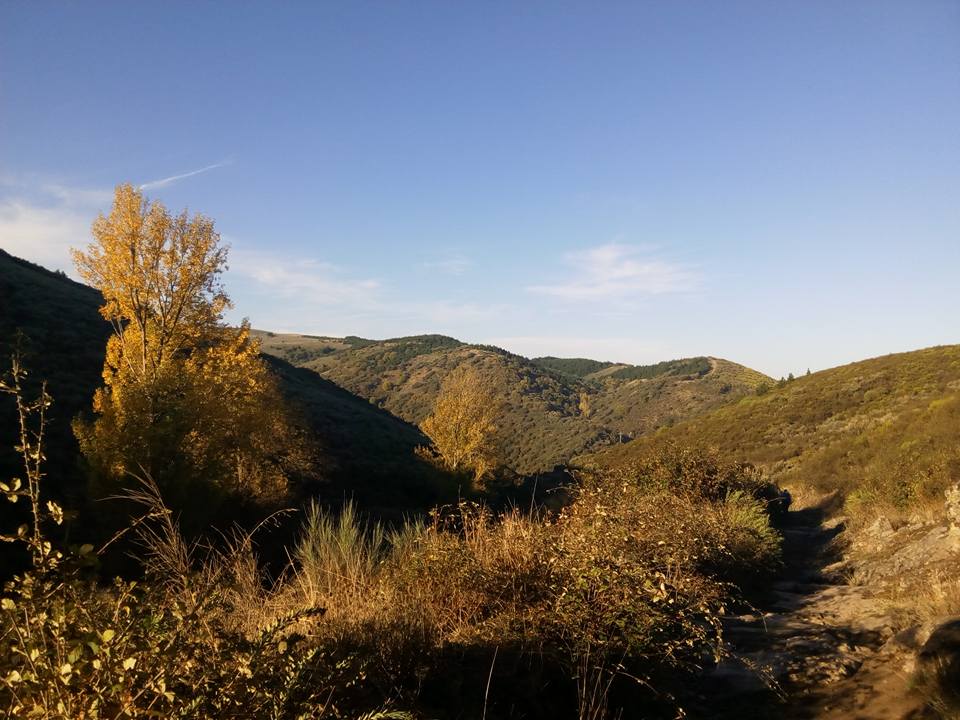
From Manjarín begins one of the most technically demanding sections of the entire French Way — and one of the most spectacular. The descent to Molinaseca covers 17.5 km on the LE-142, losing approximately 990 m of altitude. The gradients average 9% and reach 14% on some sections. Curves are sharp, the road is two-way and shared with vehicles, and the surface is wet in cold or rainy weather.
The pedestrian Camino runs parallel to the road on sections, but diverges at points onto narrow trails close to cliffs. For cyclists, the road is the only safe option for this entire descent. Some experienced cyclists do ride the trail sections, but the combination of narrow path, loose surface, steep gradient and proximity to drop-offs makes this genuinely dangerous — particularly on a loaded touring bike. In 1988 a German pilgrim named Heinrich Krause fell from a cliff on his bicycle on this section while following the Jacobean path. A monument in his memory — an iron sculpture of a bicycle fused to a pilgrim’s staff — stands at the exit of El Acebo de San Miguel. It is both a memorial and a warning.
The road descent has its own rewards. El Acebo de San Miguel (km 36) sits on the mountainside with the road as its main street, small stone houses with slate roofs, bars and a pool. The views from the road below and above are extraordinary — the moment when the brown plains of Castile finally give way to the green of El Bierzo is one of the decisive visual transitions of the whole Camino. You can see it happening as you descend.
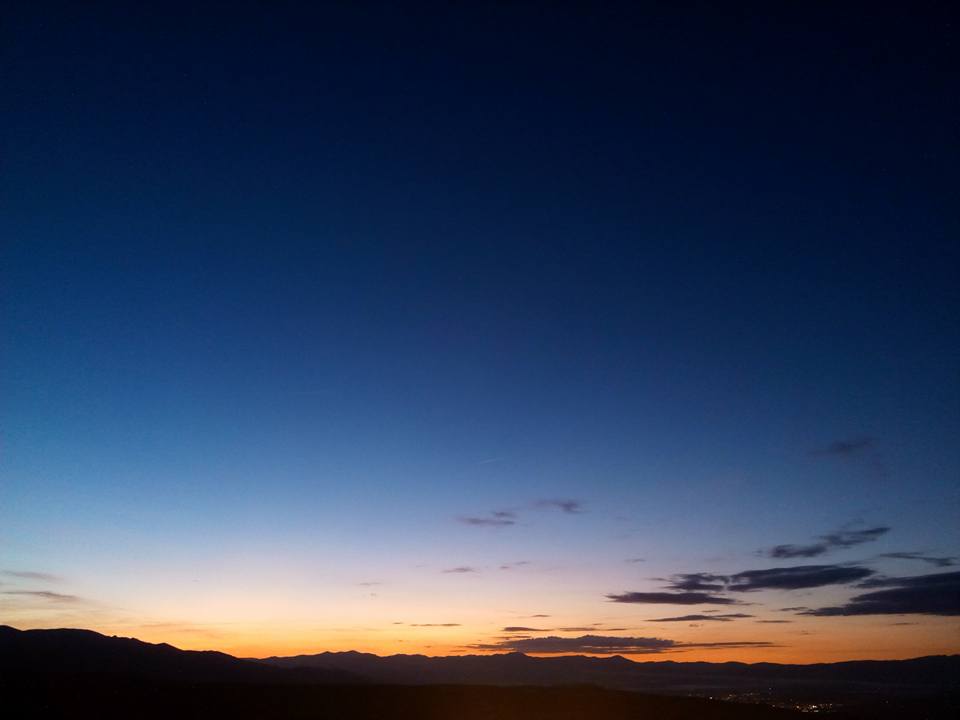
After El Acebo the road continues steeply through Riego de Ambrós — a small village with the chapel of San Sebastián and the parish of Santa María Magdalena with an 18th-century altarpiece — before easing slightly on the final approach to Molinaseca. The pedestrian trail from Riego de Ambrós involves a stone and slate path that is technically impossible for cyclists; stay on the LE-142 throughout this section.
On the right just before entering Molinaseca is the chapel of Nuestra Señora de las Angustias. Its back is built directly into the mountainside, and the weight of the rock against the temple made it necessary to build a tall counterbalancing belfry on the western facade in 1931 — an unusual structural solution, and one that gives the chapel its distinctive profile. A legend places a predecessor chapel here in the 11th century; what survives was built between the 16th and 20th centuries.
Molinaseca: the bridge, the river and the first flat road since Astorga (km 45)
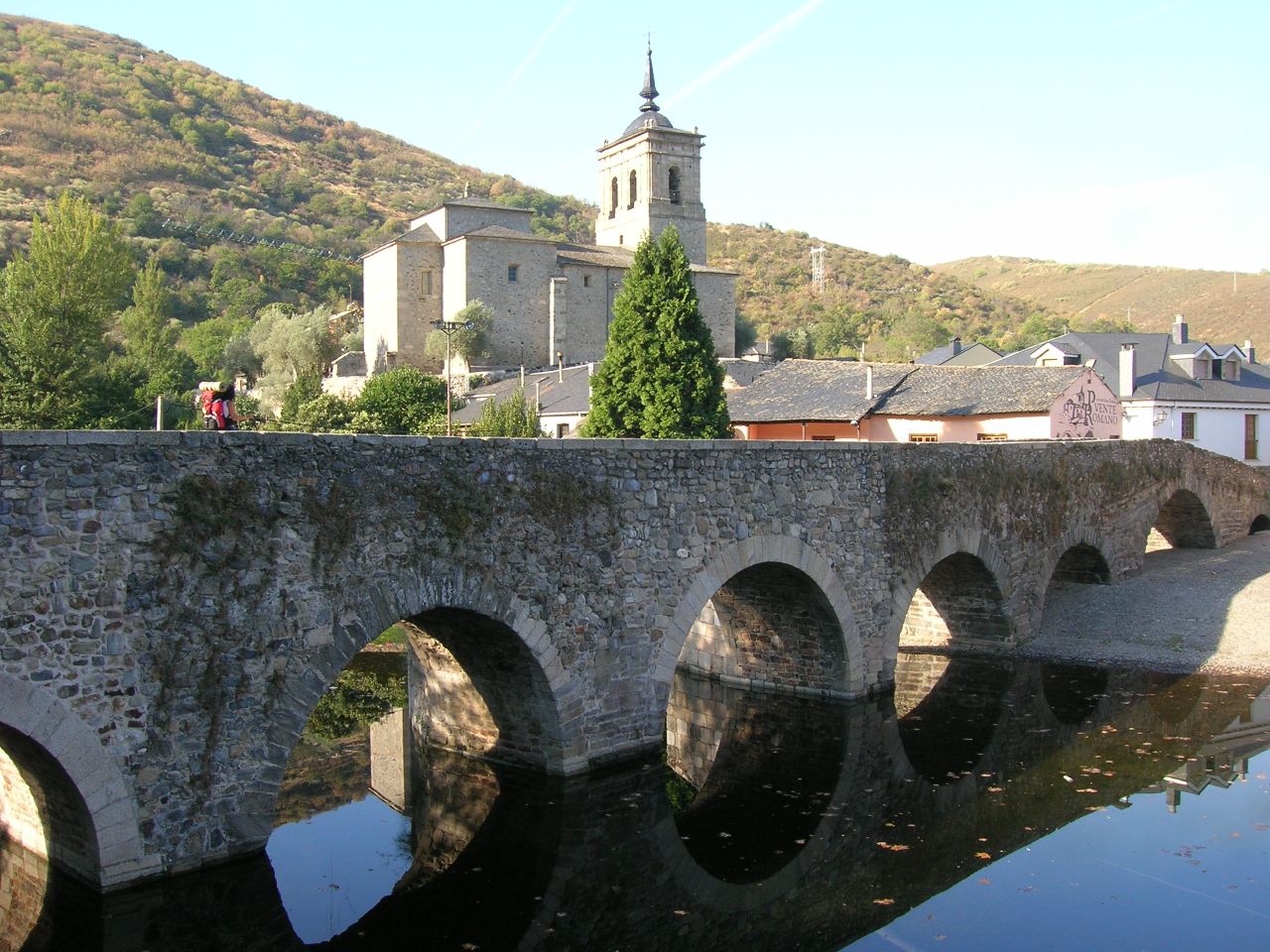
Molinaseca arrives at km 45.7 after the long descent and is exactly what you need: a small, attractive town centred on a stone bridge over the cold, clear Meruelo river. The Puente de los Peregrinos — Pilgrim’s Bridge — has been here in some form since the 12th century, though the current structure’s seven arches represent various phases of construction and repair over the centuries. Medieval sources confirm its existence from at least the 12th century; a Roman origin has been proposed but not established. Pilgrims on foot traditionally remove their boots and rest their feet in the river after the descent. On a bike, you have had the harder work of controlling your speed for 17 km — rest here too.
Once across the bridge, the Calle Real of Molinaseca has everything you need. This is a genuine rest and refuelling stop before the final flat 8 km to Ponferrada. For those who prefer to end the day here rather than in the city, Molinaseca has good hostel and hotel options in a quieter setting than Ponferrada.
Into Ponferrada (km 45–54)
From Molinaseca the LE-142 continues on a much gentler, almost flat profile for the final 8 km. After crossing the bridge over the Boeza River (km 50), yellow arrows offer a left turn onto a path leading to the Castillo Avenue in Ponferrada’s urban centre. The road option arrives at the same avenue without the detour — both are appropriate for cyclists. Follow the avenue to the bridge over the Sil and, on the right, the Templar castle appears. You have arrived in Ponferrada.
When you arrive: Ponferrada
Ponferrada divides cleanly along the Sil river: the eastern bank holds the monumental old city, the castle and the historic streets; the western bank is the modern industrial and residential expansion. Everything worth visiting is on the eastern bank and compact enough to cover in 90 minutes of walking. The evening is well spent here — Bierzo gastronomy is among the best on the entire Camino, and the castle at sunset is difficult to forget.
From an iron bridge to a Templar capital
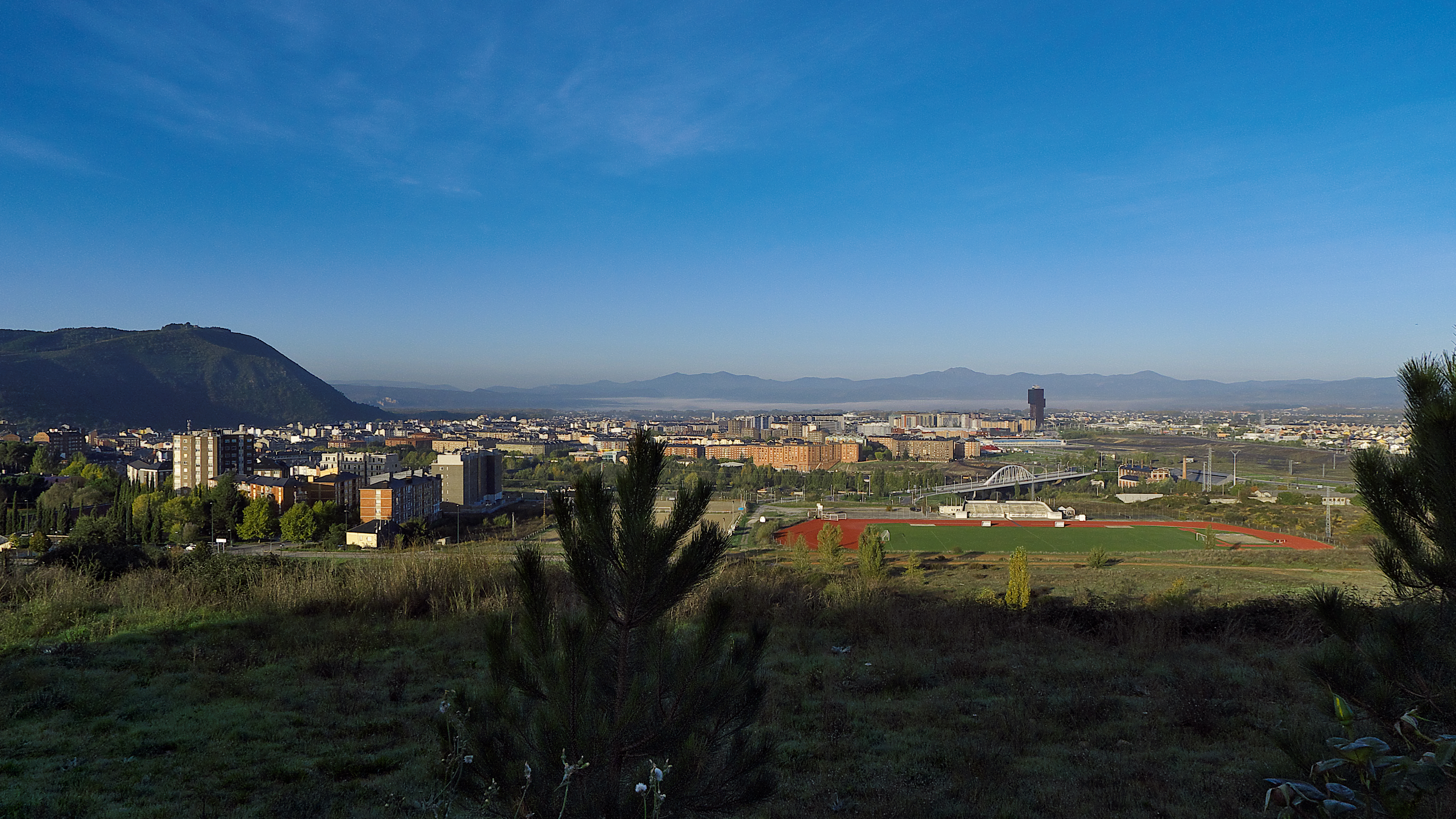
Though there are traces of Iron Age and Roman presence on the shores of the Sil, no document confirms a significant settlement here before the 11th century. What the documents do confirm is that in 1082 the bishop of Astorga ordered a bridge built over the Sil to facilitate the passage of Jacobean pilgrims. On the bridge were placed iron chains to control access and extract a toll — the pons ferrata, the iron bridge. Some historians believe the name instead refers to iron reinforcements in the bridge’s structure; the debate is unresolved, but both explanations end in the same name. A small town grew on the western bank around a church dedicated to San Pedro.
The eastern bank remained uninhabited until the second half of the 12th century, when Ferdinand II built a small fortress on a promontory above the river. Around it another settlement grew. In 1178 the king ceded that part of the territory to the Order of the Temple; in 1211 his successor Alfonso IX granted the Order complete authority over the city. The Templars, whose mission included protecting pilgrims on dangerous sections of the Camino, found Ponferrada ideal: a natural strongpoint controlling the mountain crossing from León into Galicia, where the road was most dangerous and their presence most needed. They expanded the fortress into a major castle and dominated the city for over a century.
The Order’s dissolution in 1312 — which we have traced through Villalcázar de Sirga and Terradillos across the previous stages — left a power vacuum in Ponferrada that the great Castilian noble families rushed to fill. The Osorio family (lords of Astorga) and the Counts of Lemos (based in Monforte de Lemos, Galicia) fought over the castle through the 15th and 16th centuries. The conflict between the Count of Lemos and his own son over the castle gave the Catholic Monarchs the opportunity they needed: they intervened, declared the fortress royal property and installed a governor. The city remained under royal administration until the 19th century, when it grew beyond its medieval walls during the industrial expansion that exploited the Bierzo’s coal and iron deposits. A thermal power plant opened in 1949 and for decades dominated the city’s economy. Today Ponferrada has around 64,000 inhabitants and the Templar castle standing above the Sil looks much as it did six centuries ago.
The walking tour (90 minutes)
The Templar castle
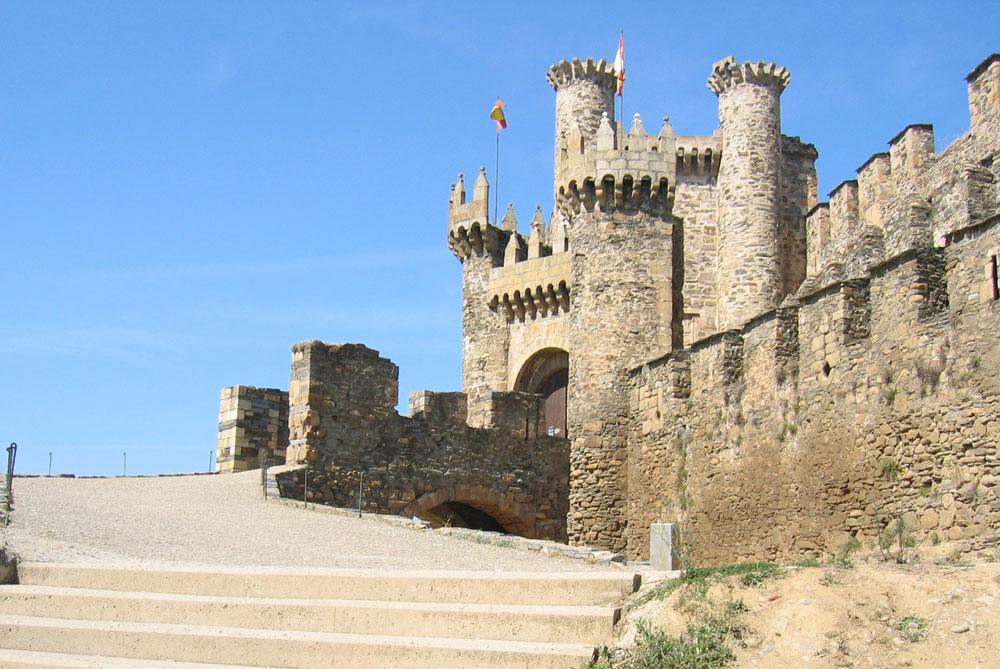
Begin at the castle — you cannot miss it. The fortress is the equivalent of eight football pitches in area, and its state of preservation is exceptional for a building that has seen continuous use and conflict across eight centuries.
What you see today is actually the superimposition of three construction phases. The northern section preserves elements from Ferdinand II’s original 12th-century fortress. After the Templar dissolution the Osorio family built the Castillo Viejo (Old Castle) on available ground within the perimeter. Later the Count of Lemos expanded it into the Castillo Nuevo (New Castle) — a fortress-palace complex that expressed both military power and aristocratic ambition. The whole polygonal enclosure was surrounded by a moat except on the river side; double and triple defensive walls, towers of different shapes, barbicans and an enormous internal courtyard create a layered defensive system that tells the history of castle architecture across three centuries.
The monument was seriously degraded in the 19th century — stones were extracted for building material and the courtyard used as grazing land — before being declared a National Historic Monument in 1924. A restoration campaign transformed it into a museum. Entry costs approximately €6; closed Mondays, open 10:00–14:00 and 16:00–18:00. Allow at least an hour inside.
San Andrés, the Museo de la Radio and the Virgen de la Encina
Opposite the castle entrance is the church of San Andrés — a 17th-century building that houses the Cristo de la Fortaleza, a Christ figure originally kept in one of the castle’s chapels. A single nave with a Baroque altarpiece of six alcove figures.
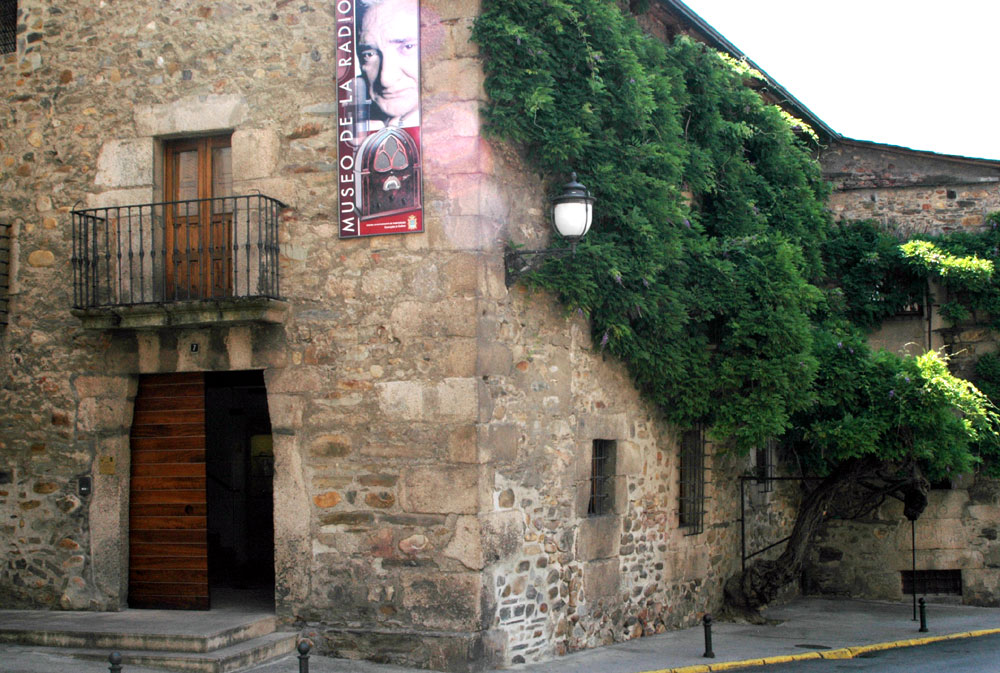
Follow the pedestrian street Gil y Carrasco past the tourist office and on the right, the Museo de la Radio. The explanation for such a specific museum in this specific city: Ponferrada is the birthplace of Luis del Olmo, the Spanish radio broadcaster who presented Protagonistas — for decades the most listened-to programme in Spanish radio, with over 12,000 emissions. The museum occupies the 17th-century Casa de los Escudos, displaying his receiver collection alongside the history of radio broadcasting from its earliest days. It is a more interesting visit than it might initially sound.
Continue up Gil y Carrasco Street to the Plaza de la Virgen de la Encina and the basilica of the same name. La Virgen de la Encina — the Virgin of the Holm Oak — has been the patron saint of El Bierzo since 1908, and her origin story involves both San Toribio (whose cross you saw on Stage 9) and the Templars.
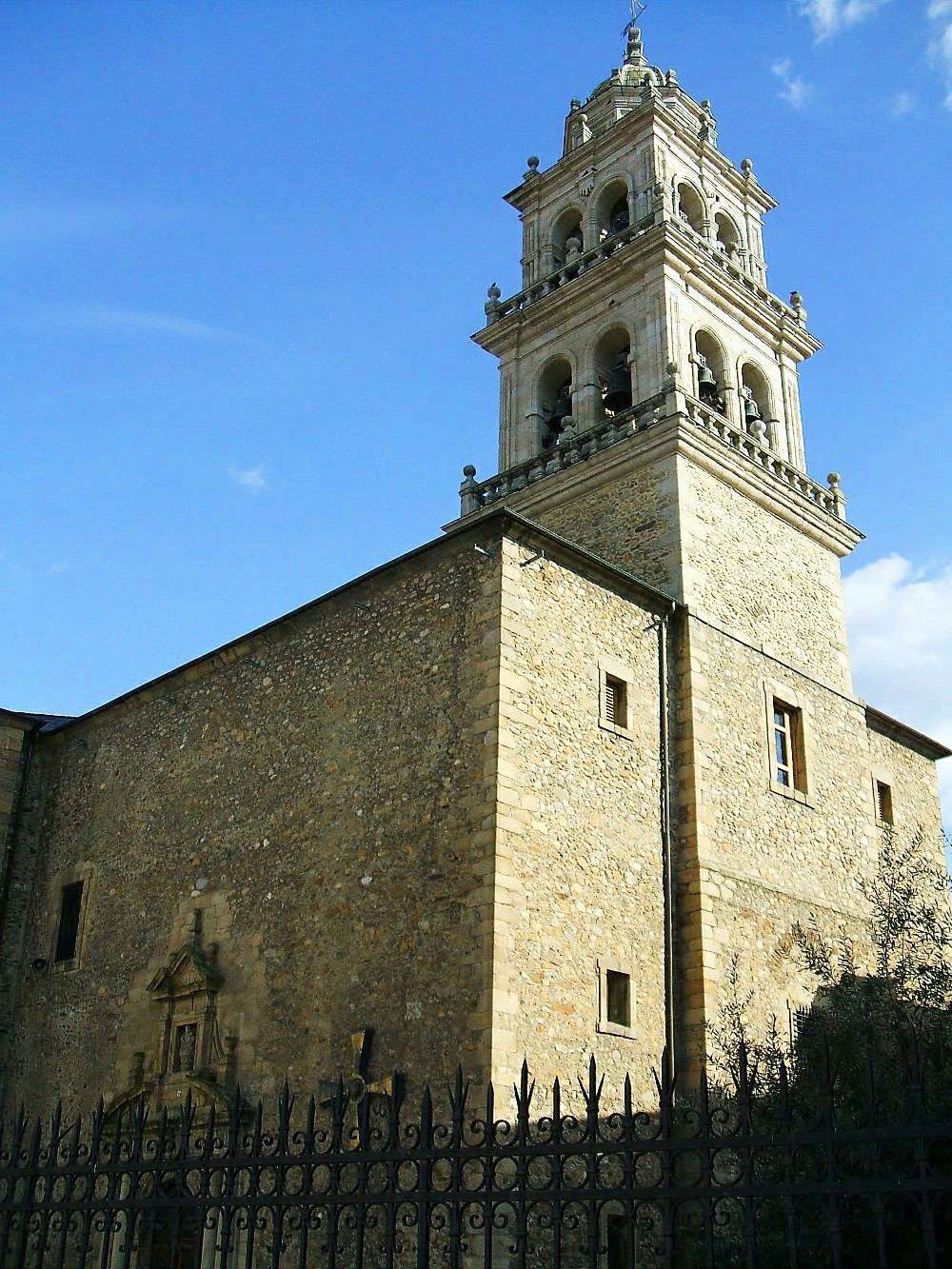
The legend: San Toribio brought the Virgin’s image from Jerusalem in the 5th century. When the bishop of Astorga heard of the approaching Arab armies in the 9th century, he hid the image in a forest holm oak to protect it from destruction. Six centuries later — on 8 September, a feast day of the Virgin — Templar workers cutting timber for the castle expansion split open a holm oak and found the image inside, undamaged. The sculpture you see today dates from the 16th century; the original has been lost. The basilica was built in that same century to replace a 12th-century church that had become too small. Construction stretched across nearly two centuries, interrupted by epidemics and administrative problems, which explains the architectural plurality of its interior: late Gothic, Renaissance, Classicism and Galician Baroque coexist in the same building without incoherence.
The Museo del Bierzo and the Torre del Reloj
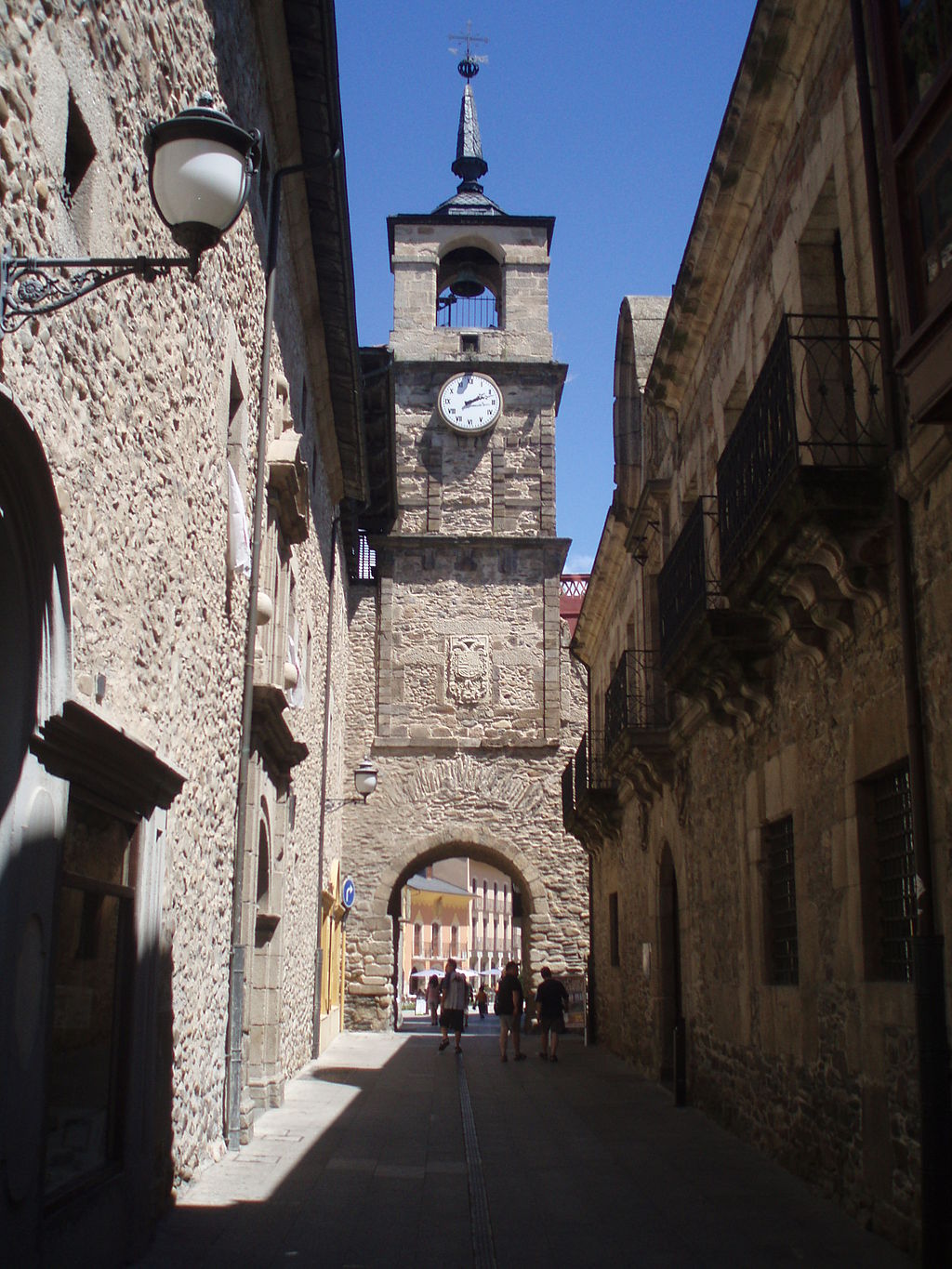
From the plaza, Calle del Reloj leads north. Near its end, on the right, is the Museo del Bierzo — a museum of regional history occupying the building where the king’s governor (corregidor) lived from the 16th century onward. The collection runs from the Palaeolithic to the 20th century and is the most thorough account of El Bierzo’s past available in one building. Open Tuesday to Sunday; afternoon hours only after 16:00.
Beyond the museum you pass through the Torre del Reloj — the only surviving gate of the medieval city wall that once enclosed all of Ponferrada. The arch of the gate is 15th-century; above it two bodies were added in the 16th century, the lower bearing Philip II’s shield and the upper housing the clock that gave the street its name. A third belfry body was added in the 17th century. The clock’s original 16th-century mechanism is preserved inside the Museo del Bierzo. The view of the street from under the arch — the old city framed by medieval masonry — is one of the better compositions Ponferrada offers.
Gastronomy in El Bierzo
The Plaza del Ayuntamiento on the far side of the Torre del Reloj and the surrounding streets are where you eat in Ponferrada. El Bierzo has its own certificate of origin for several products, and the gastronomy reflects a region that is genuinely distinct from the Castilian plateau behind you: the climate is wetter, the soil richer, the produce different.
The signature dish is the botillo del Bierzo — pork offcuts (ribs, tail, tongue) marinated in paprika and garlic, stuffed into a pork stomach, smoked and then slow-cooked. It is served with potatoes, cabbage and chickpeas. The texture and flavour are unlike any other cured pork product on the Camino — denser and more complex than a simple sausage, less refined than a jamón, deeply smoky and intensely savoury. It is the meal after Stage 10.
Beyond the botillo: roasted Bierzo peppers (thin-skinned, sweet, often served with the botillo or on their own with olive oil), Bierzo wine (the local Mencía grape produces reds that are lighter and more perfumed than Ribera del Duero, excellent with the food), chestnuts in season (October–November), and Bierzo cherries in spring.
Worth the detour: Las Médulas
About 25 km south-west of Ponferrada — roughly an hour by car or two to three hours by bike — the landscape of Las Médulas is unlike anything else in Spain. This was the largest gold mine in the Roman Empire, exploited from the 1st to the 3rd century AD, and the extraction method left a permanent, spectacular mark on the terrain. UNESCO designated it a World Heritage Site in 1997, partly for its archaeological significance and partly because the landscape itself is the monument.
The ruina montium technique
The Romans called their extraction method ruina montium — the ruin of mountains. Engineers surveyed the gold-bearing hillsides and carved an extensive network of tunnels and galleries deep into them. They then diverted rivers and streams into enormous reservoirs above the hillsides and, at the right moment, released the stored water all at once through the tunnel network. The sudden pressure demolishing the hill from within sent millions of tonnes of rock and soil cascading downhill in minutes, where it was channelled into washing channels to separate the gold. The process required extraordinary engineering — kilometres of aqueducts, precisely calibrated water storage — and left equally extraordinary results.
What remains today is a landscape of red and ochre sandstone towers rising 50–100 m from a sea of eroded slopes, colonised now by chestnut and oak forest that softens the geology without hiding it. The Romans extracted an estimated 1.5 million kg of gold from this site over two centuries of operation. The human cost — the labour was done by slaves and condemned prisoners — is not recorded with the same precision.
You will have seen Las Médulas mentioned as the mines associated with the Roman foundation of León (Stage 8) and Astorga (Stage 9). From the summit of Monte Teleno — visible from the stage today — the mine would have been visible in operation. From Ponferrada’s castle you can sometimes see the red towers to the south-west.
Practical notes for visiting
The main viewpoint is at the village of Las Médulas itself, reached via the LE-142 south from Ponferrada through Carucedo. The landscape is best appreciated from the Mirador de Orellán — a 20-minute climb on foot from the car park, with the best panoramic view over the towers and forest. The village has a visitor centre and guided tours of some of the Roman tunnel galleries (cave visits require advance booking, especially in summer). Allow half a day minimum; a full day allows the hiking circuits through the chestnut forest and up to the viewpoints.
By bike from Ponferrada the route is approximately 25 km each way with around 300 m of climbing on the approach. Most visitors do it by car as a rest-day excursion. The surrounding area — the villages of Carucedo, La Barosa and the shores of the Lago de Carucedo — offer additional walking and cycling circuits in a landscape that rewards time.
Practical notes for Stage 10
The descent: safety first
The 17.5 km descent from Manjarín to Molinaseca on the LE-142 requires respect. Average gradient 9%, maximum 14%, two-way traffic, curves, and a surface that becomes slippery in wet or cold conditions. Check tyre pressure and brake function before leaving Rabanal. Disc brakes are strongly recommended; rim brakes on a loaded bike on a 14% wet descent are a risk. Dress warmly at the top — the temperature at the Cruz de Ferro can be 10–15°C colder than at Astorga, and the wind intensifies on the exposed ridge. Never take the pedestrian trail from Manjarín to Molinaseca on a bike.
Water and supplies
Services are available at roughly 5 km intervals through the Maragato villages (Murias, Castrillo detour, Santa Catalina, El Ganso, Rabanal). After Rabanal there is nothing reliable until El Acebo (km 36), 16 km further — and the 8 km between Foncebadón and El Acebo include the highest and most exposed part of the stage. Fill your bottles in Rabanal before the climb to the Cruz de Ferro. Molinaseca (km 45) has full services for the final push to Ponferrada.
Weather on Monte Irago
The section between Rabanal and Manjarín (and the Cruz de Ferro at 1,502 m) is infamous for sudden and severe weather. Snow is possible from October to May; dense fog occurs throughout the year; the wind on the exposed ridge can be extreme. Check the forecast before leaving Astorga and again before leaving Rabanal. If conditions are bad, wait — the descent on a wet LE-142 in heavy rain with reduced visibility is genuinely dangerous. Carry a wind and rain layer in your bag regardless of the morning weather.
Surface and bike type
The stage is predominantly tarmac (the LE-142 and its variants) with gravel alternatives available for the flatter Maragato section. An MTB or gravel bike handles the full stage comfortably. A road bike is also fine on the main road throughout, including the descent. The pedestrian trail sections should be avoided on any bike type between Manjarín and Molinaseca. An e-bike makes the 8.6 km climb from Rabanal to the Cruz de Ferro significantly less demanding but does not change the safety requirements for the descent.
Starting in Astorga
Astorga has direct rail connections to Galicia (Ferrol, A Coruña, Vigo), Madrid, Barcelona, the Basque Country and other Castilian cities. Bus connections via Alsa to northern Spain and Eurolines to European capitals. Tournride delivers bikes to your accommodation in Astorga the evening before your departure.
Frequently asked questions about Stage 10
How far is Stage 10 of the Camino Francés by bike?
54 km from Astorga to Ponferrada. The stage includes around 900 m of cumulative climbing to the Cruz de Ferro (1,502 m) and a technically demanding 17.5 km descent to Molinaseca. Allow 5–6 hours of riding plus time at the Cruz de Ferro and in the Maragato villages.
Is Stage 10 the most difficult on the Camino Francés?
It is the highest and one of the most technically demanding. The climb to the Cruz de Ferro is long but gradual; the challenge is the descent from Manjarín to Molinaseca — 17.5 km on a narrow two-way mountain road with gradients to 14%. Weather is an additional factor: the section between Rabanal and Manjarín can have snow, fog and severe wind from October to May. Stage 1 through the Pyrenees has more total climbing; Stage 10 has the more serious descent.
What is the Cruz de Ferro?
The Iron Cross — at 1,502 m the highest point on the French Way. An iron cross on a 5-metre wooden pole surrounded by a massive cairn of stones brought by pilgrims from all over the world. The tradition of leaving a stone from home dates back well beyond Christianity, through Roman road religion to Celtic burial customs. The original cross placed here by the hermit Gaucelmo in the 11th century is now in Astorga’s Museo de los Caminos; the current cross is a replica.
Is the Las Médulas detour worth doing from Ponferrada?
Yes — it is one of the most spectacular and historically significant landscapes in Spain. The Roman gold mine’s ruina montium extraction technique created a UNESCO-listed landscape of red sandstone towers, chestnut forest and Roman tunnels 25 km south-west of Ponferrada. Best done as a rest-day excursion by car or a full cycling day. The Mirador de Orellán is the essential viewpoint.
Can I rent a bike in Astorga and return it in Santiago?
Yes. Tournride delivers your bike to any accommodation in Astorga the evening before your departure and collects it in Santiago de Compostela when you finish. Luggage transfer in a single leg, from the start to the end of the trip, is also available. See all bike models and check availability here.
Cycle the Camino de Santiago at your own pace.
Plan this stage by bike