Cycling the Camino de Santiago in 14 Days: Stage-by-Stage Guide
Xavier Rodríguez PrietoIs 14 days enough to cycle the Camino de Santiago?
Yes — 14 days is the ideal timeframe for cycling the French Way (Camino Francés) from Saint-Jean-Pied-de-Port to Santiago de Compostela. The route covers approximately 769 km spread across 14 natural cycling stages, averaging 54 km per day. That pace gives you time to stop for lunch, explore towns like Pamplona, Burgos or León, and still arrive at each day’s accommodation before dark.
New to planning a bike trip on the Camino? Start with our complete guide to cycling the Camino de Santiago — routes, how many days you need and which bike to choose.
If you only have one week, the last 200 km from Ponferrada are doable in 6 days and still qualify for the Compostela certificate (cyclists must complete the last 200 km, not 100 km like walkers). But if you can take two weeks, the full French Way from SJPP is the experience worth doing.
Early Bird 2027: book your Camino by bike by 22 November and get 10% off the bikes.
Book with 10% offFree Tournride Full Assistance · Online booking with no deposit · Limited codes · See the conditions
14-day itinerary: stage by stage
All distances and elevation figures below come from Tournride’s own stage data, built from over twenty years of guiding cyclists on this route.
| Day | Stage | Distance | Elevation gain | Difficulty |
|---|---|---|---|---|
| 1 | Saint-Jean-Pied-de-Port → Roncesvalles | 26–28 km | +1,250 m (Napoleon) / +900 m (Valcarlos) | ⛰️ Very hard |
| 2 | Roncesvalles → Pamplona | 48 km | Mostly downhill, Alto de Erro | 🟢 Easy-moderate |
| 3 | Pamplona → Estella | 44 km | +480 m (Alto del Perdón) | 🟡 Moderate |
| 4 | Estella → Logroño | 49 km | +200 m | 🟢 Easy |
| 5 | Logroño → Santo Domingo de la Calzada | 47 km | +250 m | 🟢 Easy |
| 6 | Santo Domingo → Burgos | 69 km | +400 m | 🟡 Moderate |
| 7 | Burgos → Carrión de los Condes | 85 km | +50 m | 🟡 Moderate (distance) |
| 8 | Carrión de los Condes → León | 95 km | Flat meseta | 🟡 Moderate (distance) |
| 9 | León → Astorga | 49 km | +250 m | 🟢 Easy-moderate |
| 10 | Astorga → Ponferrada | 54 km | +850 m (Cruz de Ferro) | ⛰️ Hard |
| 11 | Ponferrada → O Cebreiro | 52 km | +1,100 m | ⛰️ Very hard |
| 12 | O Cebreiro → Sarria | 40 km | Galician descent | 🟢 Easy-moderate |
| 13 | Sarria → Melide | 60 km | +400 m (rolling terrain) | 🟡 Moderate |
| 14 | Melide → Santiago de Compostela | 51 km | +200 m (Monte do Gozo) | 🟢 Easy-moderate |
| Total | SJPP → Santiago | ~769 km | ~5,000 m accumulated | — |
Day 1 — Saint-Jean-Pied-de-Port → Roncesvalles (26–28 km)
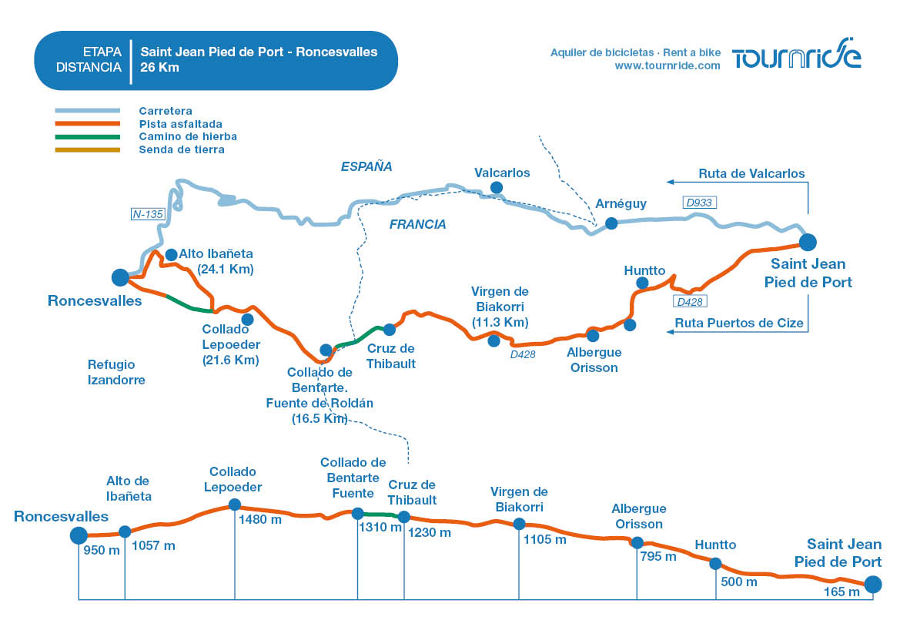
The most demanding day of the entire Camino, and it’s your first. Two routes cross the Pyrenees: the Napoleon Pass (26 km, +1,250 m via the Col de Lepoeder, mountain track, loose descent) or the Valcarlos valley road (28 km, +900 m, tarmac all the way). On a bike, Valcarlos is the safer default — the Lepoeder descent on wet dirt is genuinely dangerous with panniers. The Napoleon route is spectacular but save it for a dry September day on a gravel or e-bike. Roncesvalles itself is a cluster of medieval buildings around a 13th-century collegiate church; the pilgrims’ hostel here is one of the most atmospheric on the whole route.
Day 2 — Roncesvalles → Pamplona (48 km)
The legs are yesterday’s — today recovers them. The descent from Roncesvalles to the valley floor is long and pleasant, then a steady roll through beech forest and small Navarrese villages. The only real climb is the Alto de Erro (640 m), after which it’s downhill into Pamplona. The city is unmissable: the old town, the bullring, the walls above the river. Budget two hours here at minimum. If you’re in late June or early July, San Fermín changes everything about accommodation — book very early.
Day 3 — Pamplona → Estella (44 km)
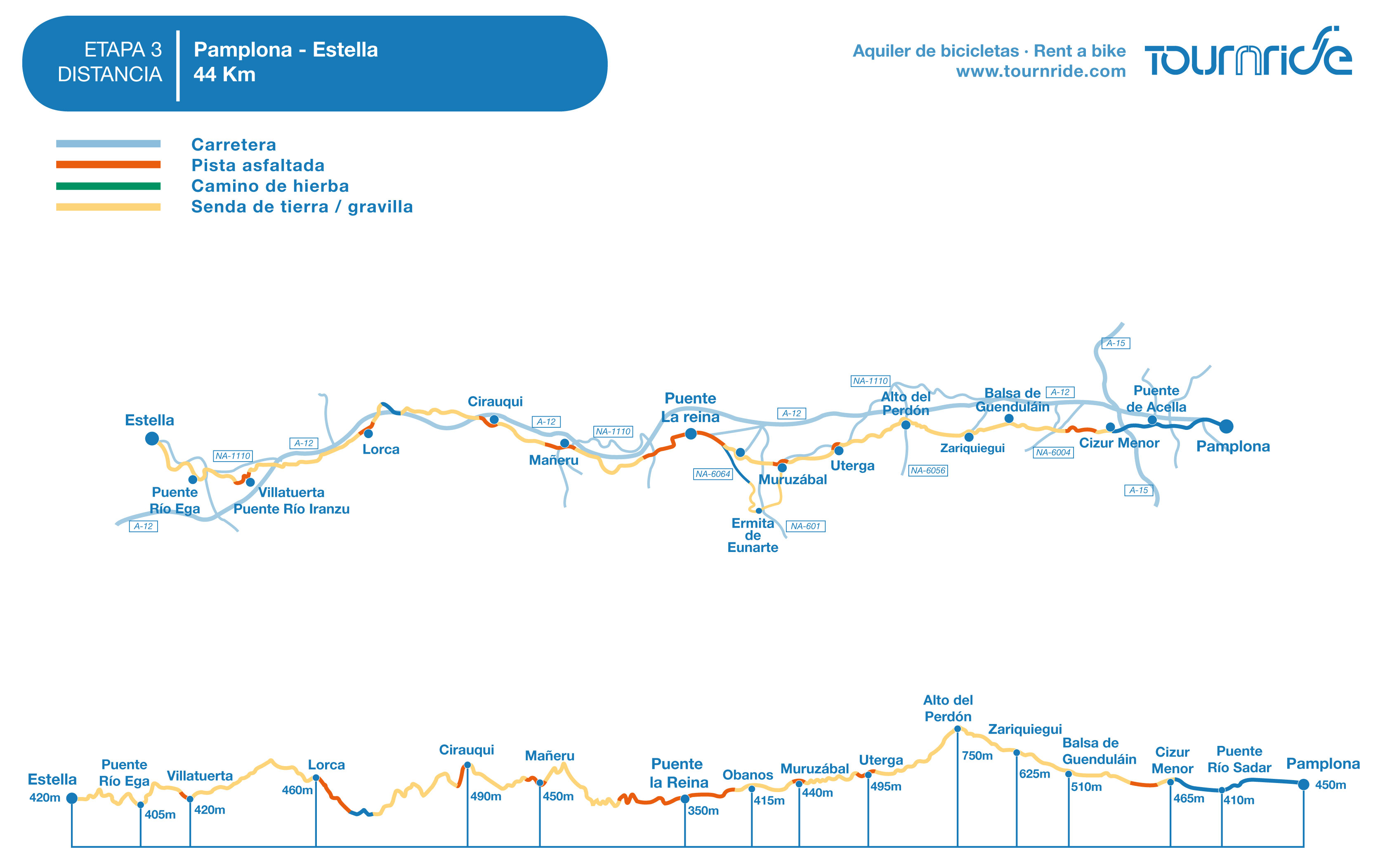
The iconic stage of the Navarrese Camino. The first 12 km climb steadily to the Alto del Perdón (780 m), where the famous line of iron pilgrim silhouettes marks the ridge. The descent on the far side is steep dirt track — mountain bike or gravel handles it well; on an e-bike, walk if wet. From there it’s rolling countryside through Puente la Reina (two medieval bridges, both worth stopping for), Cirauqui and the Roman road section near Lorca. Estella has a good medieval centre and the wine fountain at Bodegas Irache is 2 km before town.
Day 4 — Estella → Logroño (49 km)
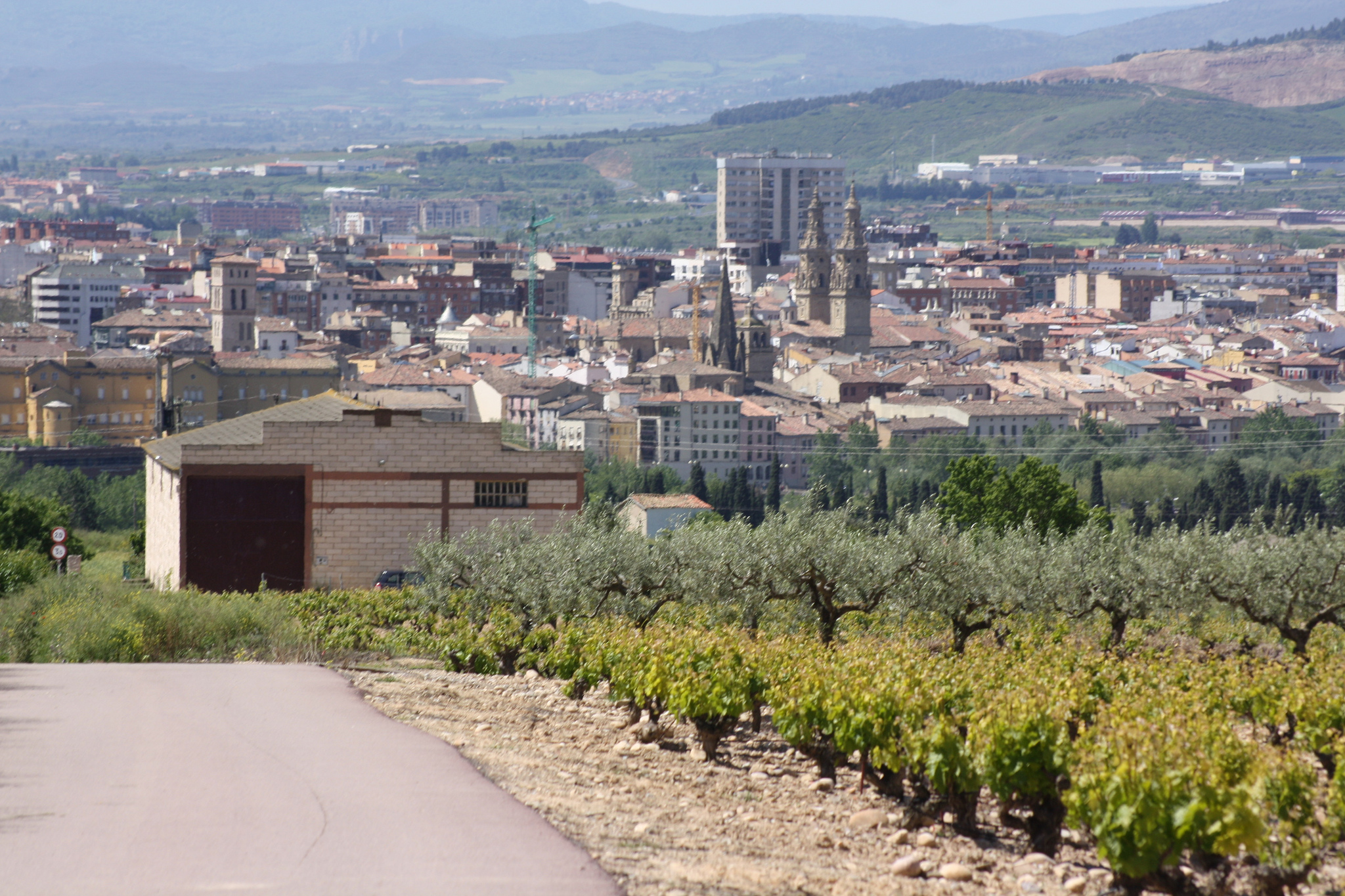
A long, pleasant day that crosses from Navarre into La Rioja. The terrain is gentle — rolling vineyard country — and the road surface mostly good. Los Arcos and Viana are the main stops before dropping into Logroño, La Rioja’s capital. The old quarter along Calle Laurel is famous for pintxos; this is a good night to eat well, because the next two days are long.
Day 5 — Logroño → Santo Domingo de la Calzada (47 km)
Easy riding through the Rioja wine country: vineyards, small stone villages, the Najerilla river valley. Nájera (30 km) has a 15th-century monastery built into a rock face and makes a good lunch stop. Santo Domingo de la Calzada is one of the most medieval-feeling towns on the route — the cathedral has a live rooster and hen inside it, a tradition going back centuries.
Day 6 — Santo Domingo → Burgos (69 km)
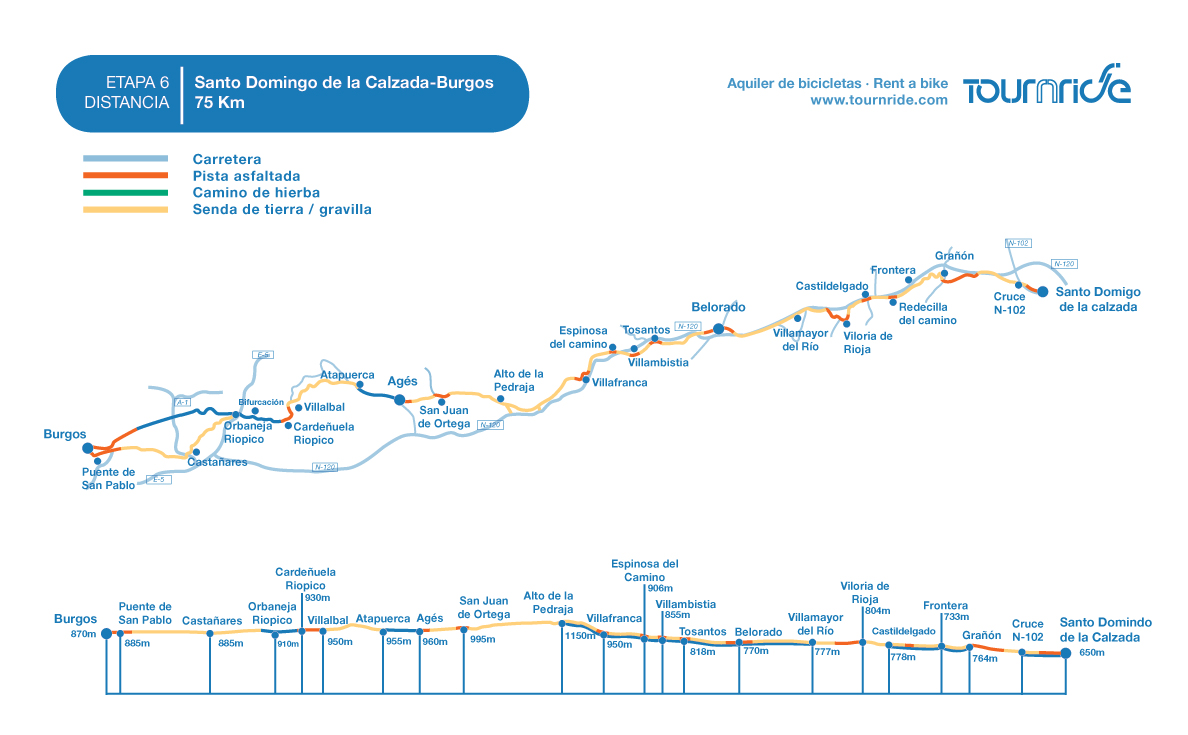
The first genuinely long day. The route crosses into Castile and León, and the landscape shifts from green Rioja to the beginning of the meseta. Belorado and Atapuerca (where the famous pre-human fossils were found) are the main waypoints. Burgos is a city worth arriving early for: the Gothic cathedral, the Cartuja de Miraflores outside town, and the Covarrubias road if you have a free morning. Today’s 69 km plus the city means a 6-hour day — start before 9.
Day 7 — Burgos → Carrión de los Condes (85 km)
The meseta begins in earnest. 85 km of almost entirely flat riding through open wheat fields and sky. The challenge is purely mental and physical endurance: minimal shade, long gaps between services and a horizon that barely changes for hours. Castrojeriz (with a hilltop castle ruin), Frómista (three Romanesque churches) and Carrión de los Condes break the journey. Carry more water than you think you need. This stage is where e-bike riders typically notice the most benefit — not from hills but from wind.
Day 8 — Carrión de los Condes → León (95 km)
The longest single stage on the route and one of the most challenging psychologically. Virtually flat but 95 km of meseta — the longest continuous stretch on the Camino. The first 17 km out of Carrión are on a gravel track beside a Roman road with no services; then the route passes through Sahagún (the halfway point of the entire Camino) and continues through several small villages. Start early. Carry lunch. León’s Gothic cathedral, with its 1,800 square metres of stained glass, makes every km worthwhile.
Day 9 — León → Astorga (49 km)
After two big meseta days, today is a relative rest. The exit from León is long and urban, but once past Virgen del Camino the road opens up and the riding is pleasant. Hospital de Órbigo has a medieval bridge and a jousting legend worth knowing. Astorga punches above its size: the Gaudí palace (now the Museum of the Ways), the Roman walls and a cathedral rival towns five times larger. Stock up here — tomorrow is demanding.
Day 10 — Astorga → Ponferrada (54 km)
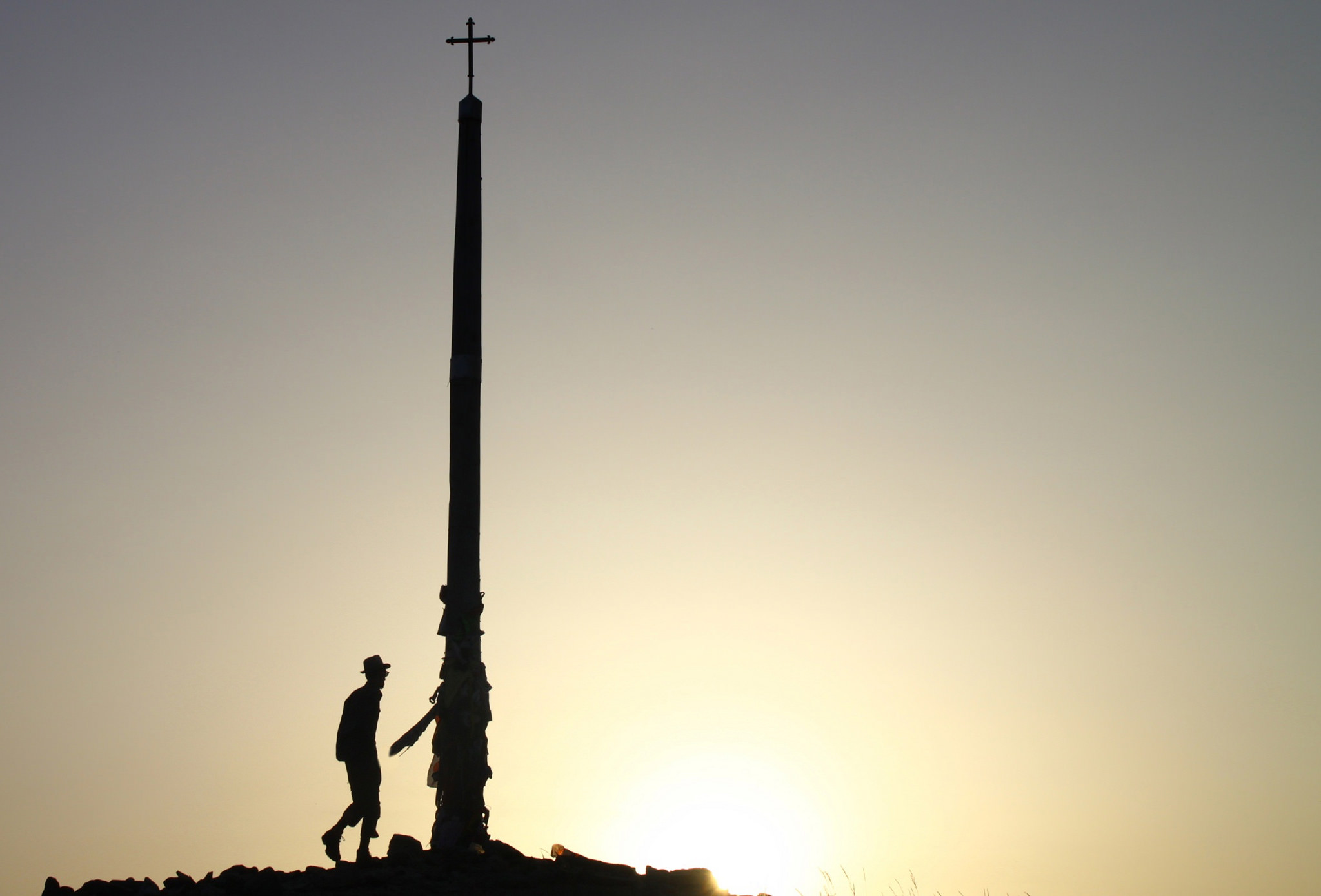
The Camino’s most symbolic stage. After flat riding out of Astorga, the route climbs steadily through Rabanal del Camino to Foncebadón (1,430 m), then continues to the Cruz de Ferro — the iron cross where pilgrims leave a stone from home. It’s a simple iron cross on a wooden pole in a pile of stones, and somehow it stops almost everyone. The descent to Molinaseca is spectacular and fast — loose surface in places, brake carefully. Ponferrada has a Templar castle; the Bierzo wines are also worth noting.
Day 11 — Ponferrada → O Cebreiro (52 km)
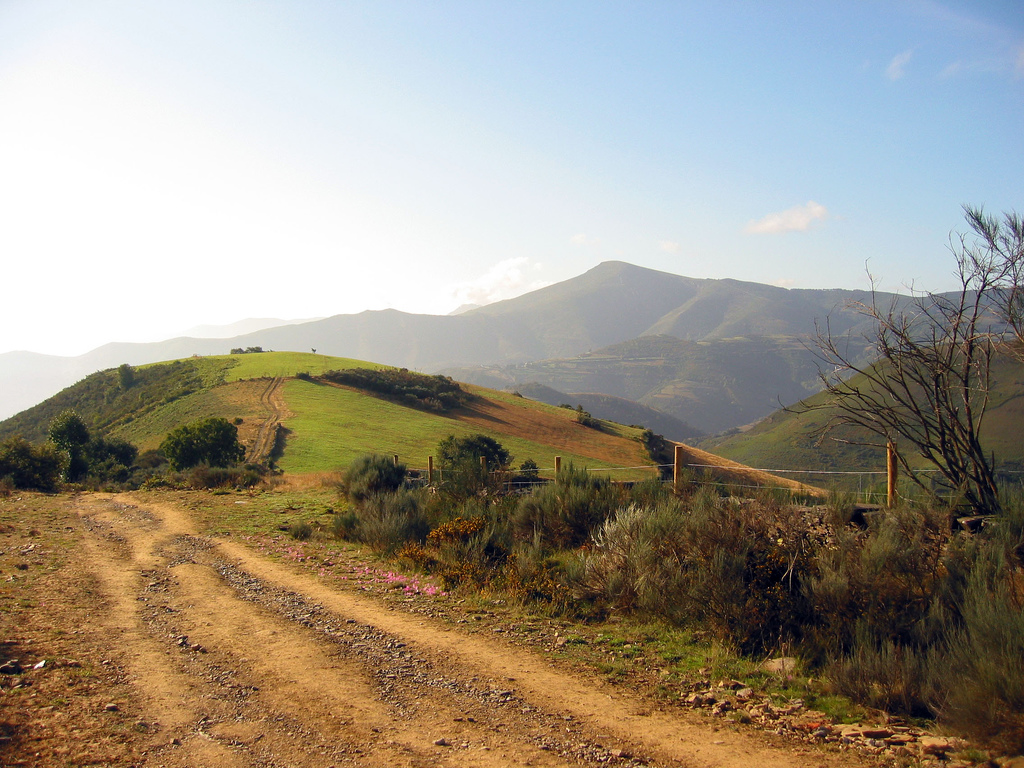
The second great mountain stage and the gateway to Galicia. The first 44 km to Las Herrerías are manageable on any bike — the valley road through Villafranca del Bierzo (one of the most beautiful towns on the route) is particularly good. Then the last 8 km climb from Las Herrerías to O Cebreiro gain over 700 m in altitude on a narrow mountain road. It’s hard even on a good day. On an e-bike it’s achievable without walking; on a muscular bike, fit cyclists manage it but expect to suffer. O Cebreiro itself, at 1,300 m, is often in cloud — cold at night in any season.
Day 12 — O Cebreiro → Sarria (40 km)
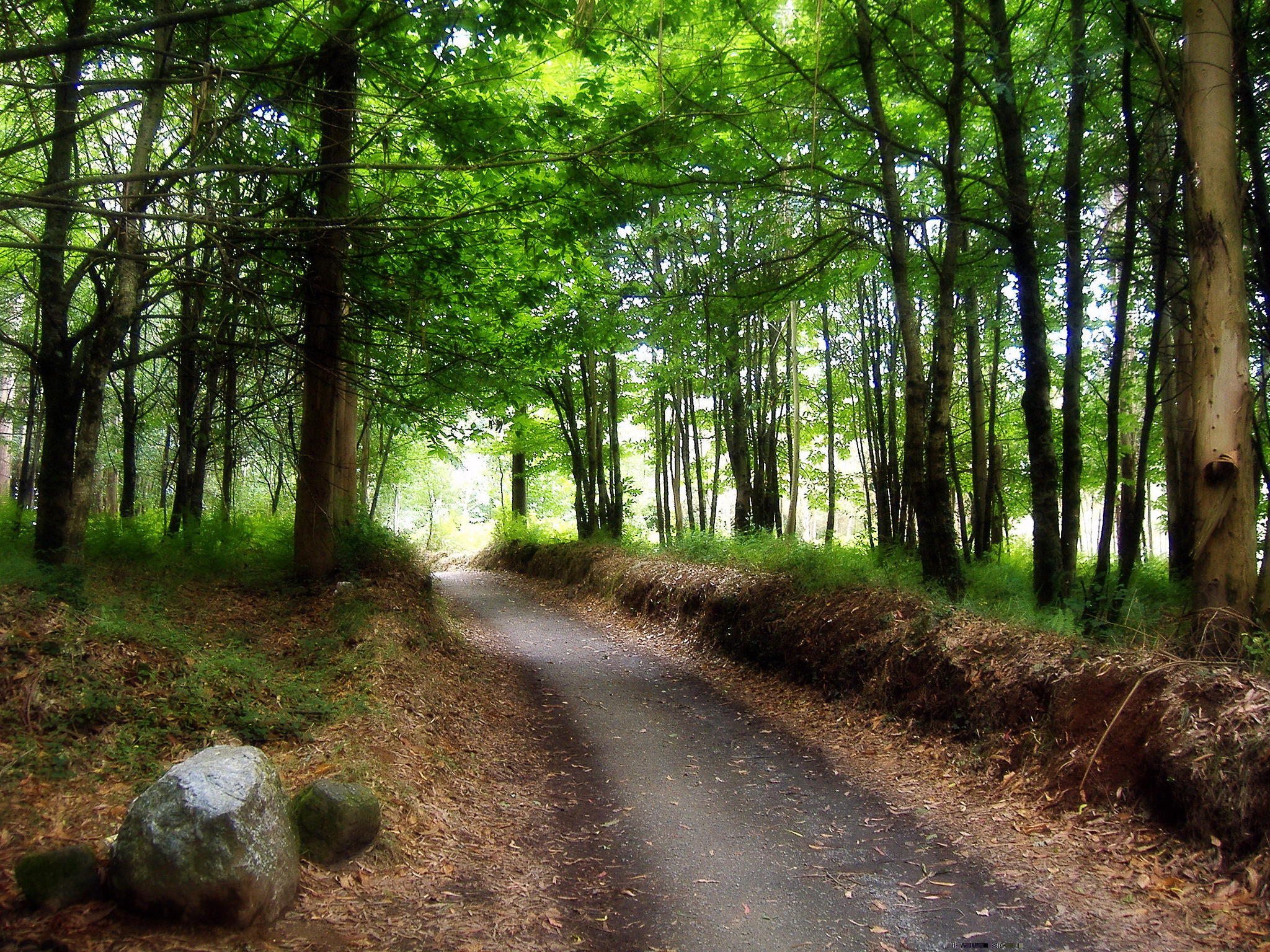
The welcome descent into Galicia. The first section runs along the ridge at altitude with views into Portugal on clear days, then drops through Celtic villages — pallozas (round stone huts), slate roofs, eucalyptus and oak. The Galician road surface is good but the humidity means moss on corners. Sarria is the last point from which walkers can start to qualify for the Compostela (100 km for walkers, 200 km for cyclists — cyclists must start from Ponferrada at minimum).
Day 13 — Sarria → Melide (60 km)
The most technical riding of the final stretch. Galicia doesn’t do flat — it does constant rolling terrain on corredoiras (old lane paths, often cobbled or dirt) and forest tracks. The section to Portomarín involves a long descent to the reservoir and a long staircase climb on the far bank (most cyclists push here). After Portomarín it’s more rolling country to Palas de Rei and then Melide. Melide is famous for pulpo á feira (octopus with paprika and olive oil) — this is the right town to eat it.
Day 14 — Melide → Santiago de Compostela (51 km)
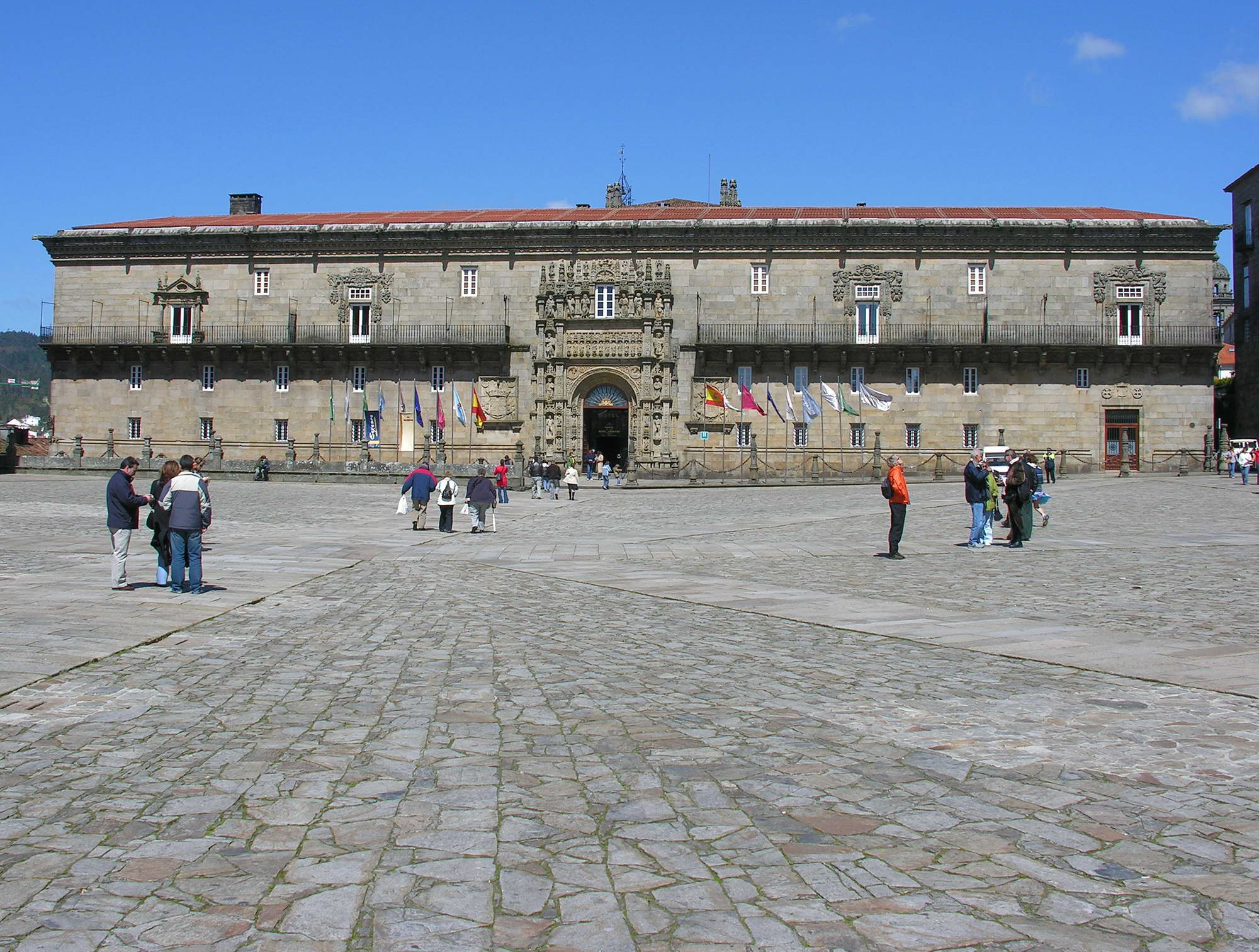
The final stage. Rolling Galician terrain through eucalyptus forest, then the Monte do Gozo (Hill of Joy) — the rise from which pilgrims traditionally had their first view of the cathedral towers. The descent into Santiago through the neighbourhood of San Lázaro leads to the old town, and then through Rúa das Casas Reais into the Praza do Obradoiro. The square, the cathedral, the noise, the other pilgrims — nothing quite prepares you for it. Tournride collects the bike in Santiago; you don’t need to do anything except lock it at the agreed point.
Which bike for 14 days on the Camino?
Three types of bike work on the French Way. The right choice depends on your fitness, who you’re riding with and how much you want to suffer on the two mountain stages.
Mountain bike or gravel
The most versatile option. Handles the dirt sections in the Pyrenees, the Galician corredoiras and the meseta gravel without complaint. If you cycle regularly and have reasonable hill fitness, a muscular MTB is perfectly adequate for the full French Way.
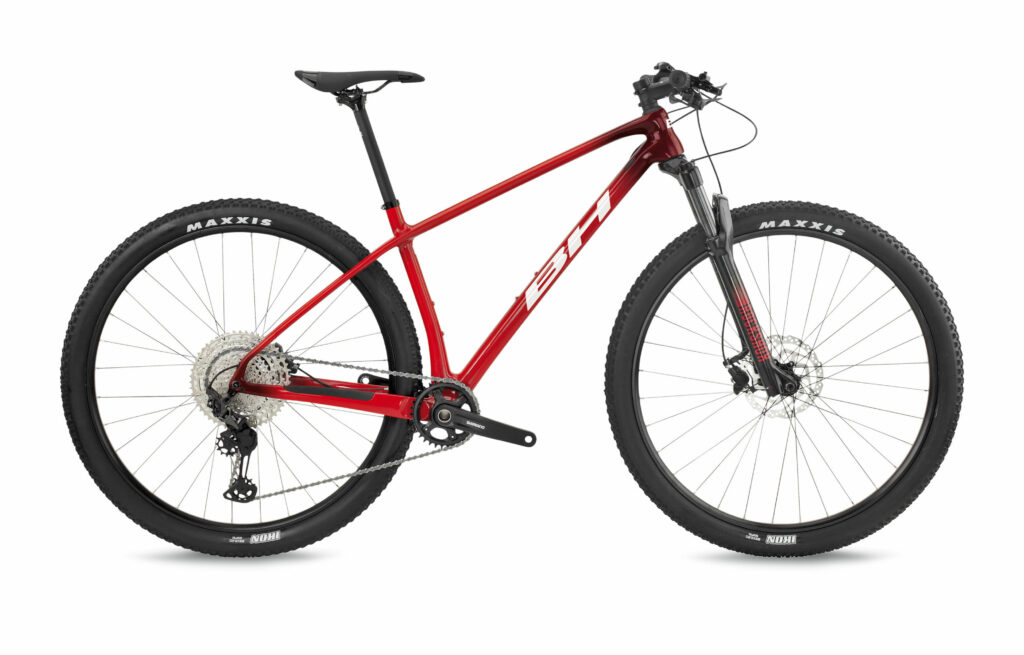
BH UltimateRC Carbon XT
Shimano XT 12v · Rock Shox Recon
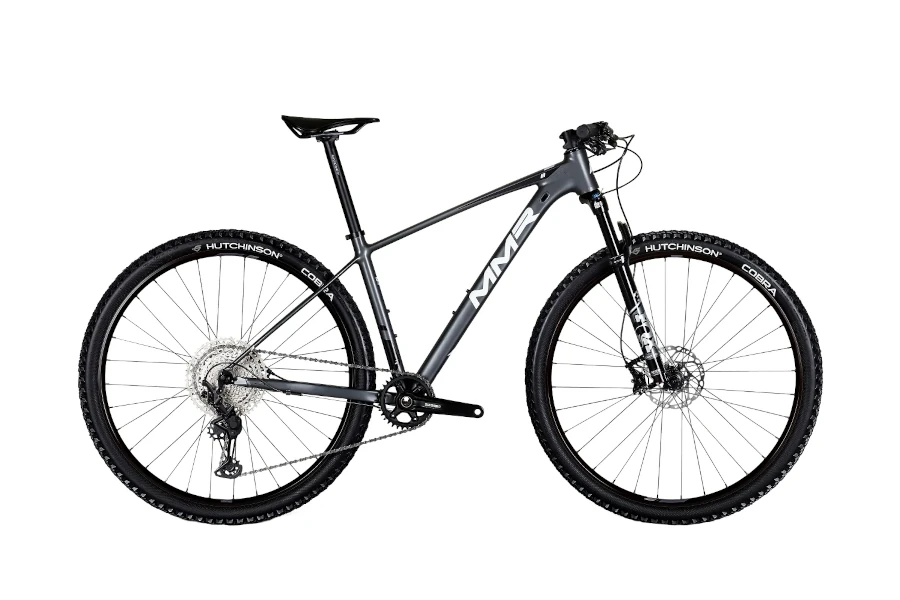
MMR Zen 00
Full XT · FOX Rhythm
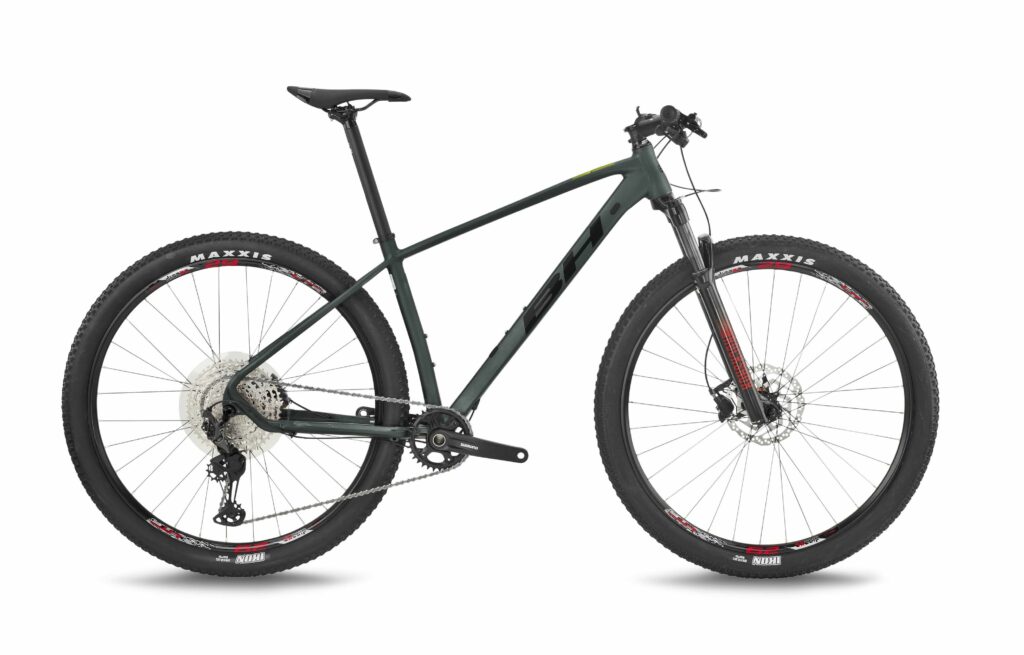
BH Expert Alu XT
Shimano XT 12v · Rock Shox Recon
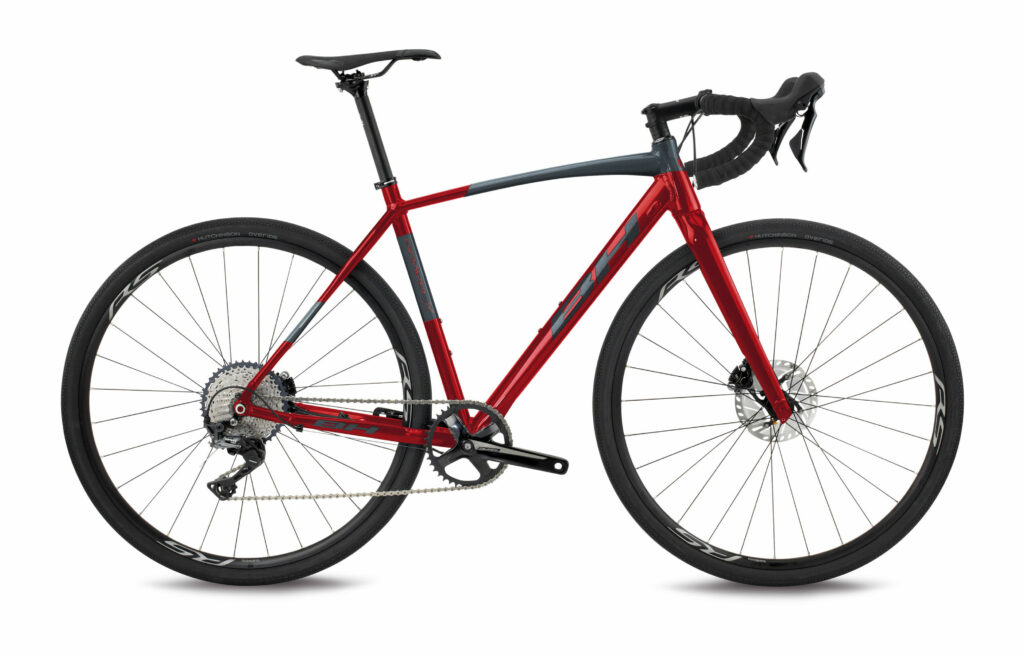
BH GravelX Alloy Disc
Shimano GRX 810 11v
→ See all muscular bikes and availability
E-bike
The most popular choice for first-timers and mixed-ability groups. The motor doesn’t make the Camino shorter — you still pedal every km — but it transforms Stage 1 and Stage 11 from potential ordeals into manageable days. It also means you arrive at each stage’s end with energy left to actually explore the town. All models cover a full day’s stage on a single charge when ridden sensibly — charge overnight at the accommodation.
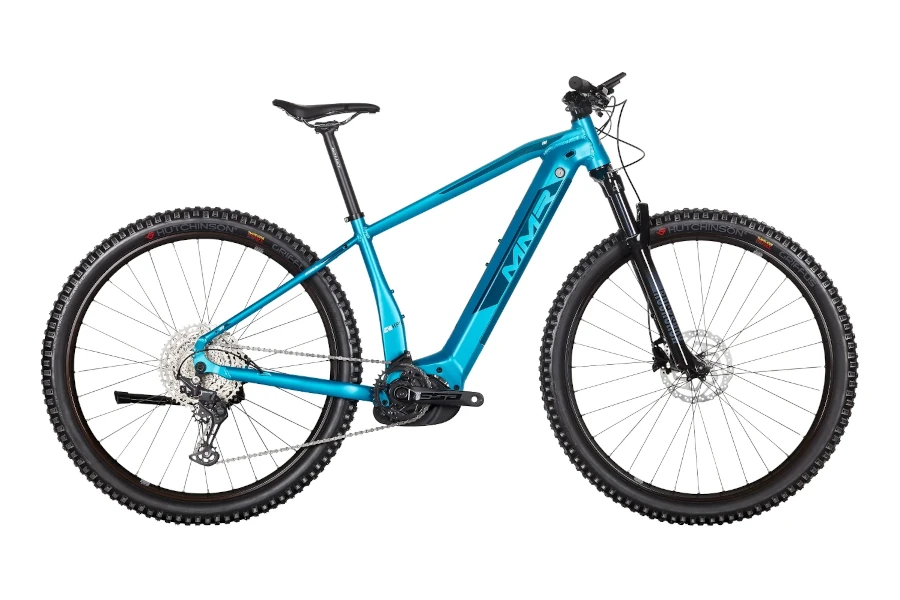
MMR Koen 00 Bosch
Bosch Performance CX · 625 Wh
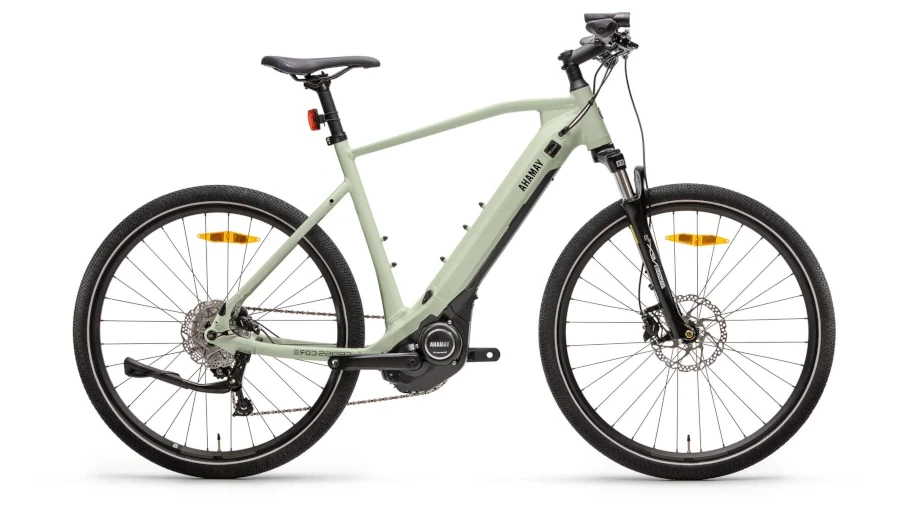
Yamaha Crosscore RC
Yamaha PW · 500 Wh
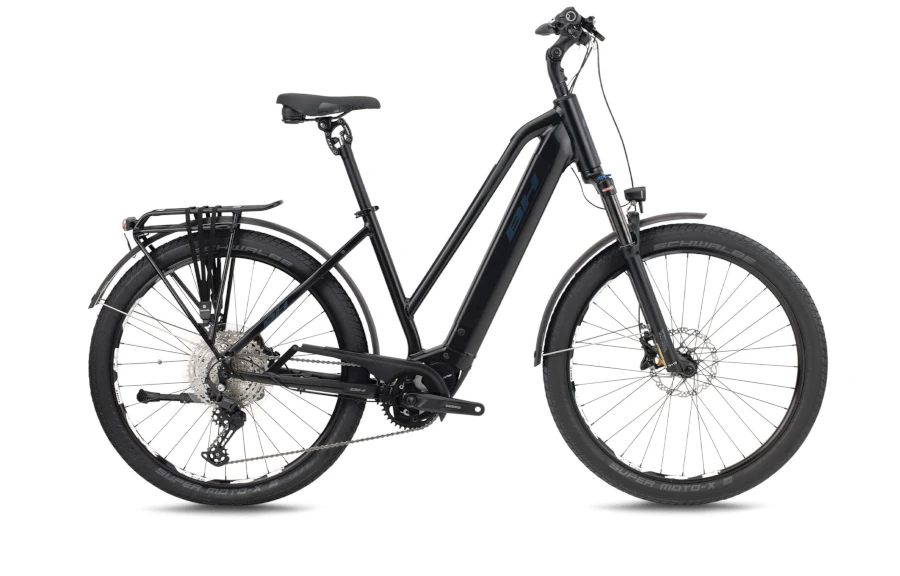
BH AtomE Jet Pro
Shimano EP6 · 720 Wh
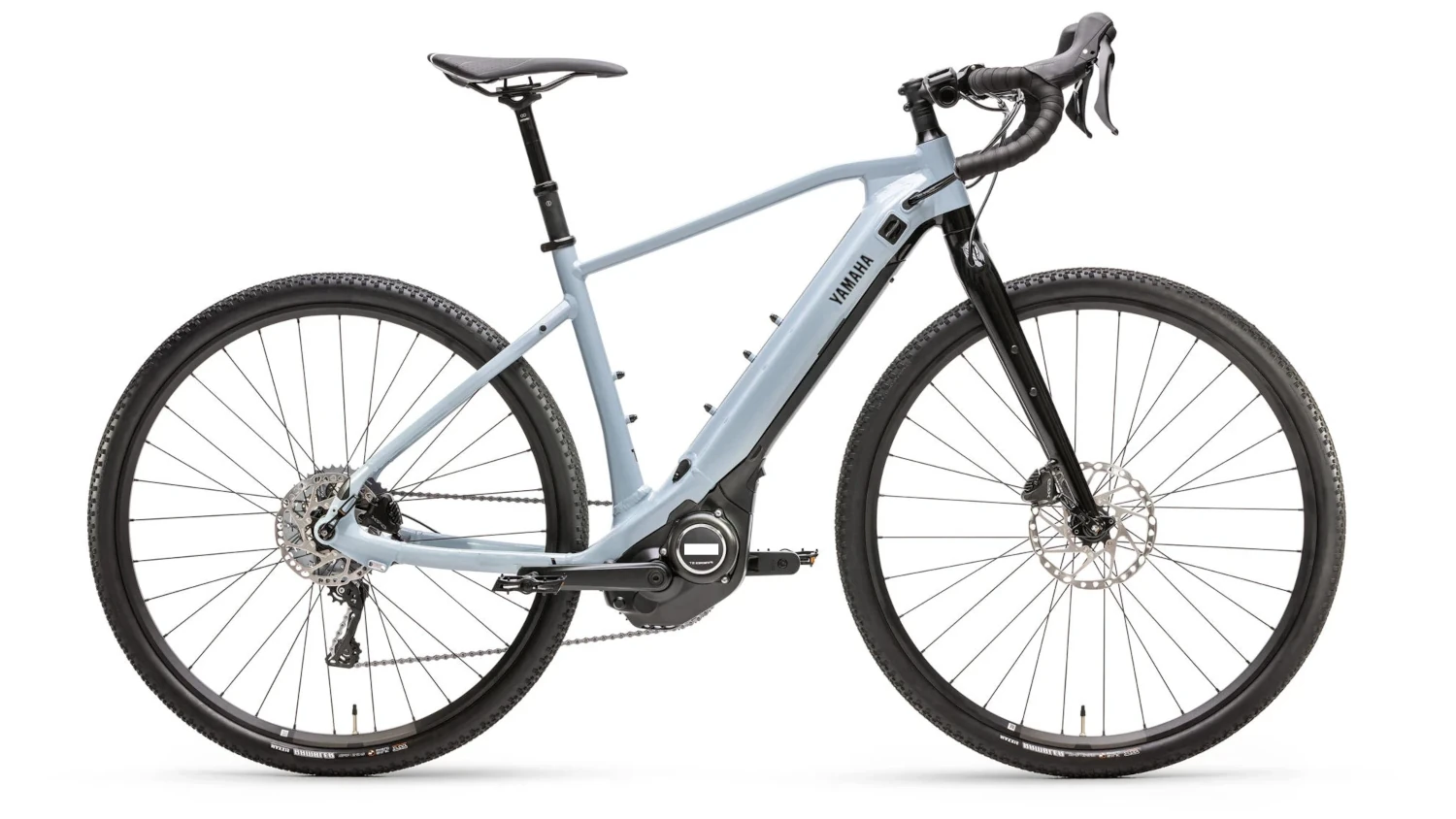
Yamaha Wabash Gravel RT
Yamaha PW · 500 Wh
One important note: the Pilgrim’s Office in Santiago requires cyclists to have completed verifiable daily stages. Don’t use the e-bike to attempt 150 km days — that defeats the point and risks discomfort and injury.
→ See all e-bikes and availability
Road bike
Not recommended for the full French Way. The Galician corredoiras, the Lepoeder descent and the dirt sections around Carrión will force constant detours onto tarmac, which means missing significant sections of the actual Camino. Fine if you’re doing a road-only variation, but that’s a different trip.
Practical information for the 14-day Camino
Accommodation
Book ahead for Stages 1 (Roncesvalles fills fast), 6 (Burgos, especially July–August) and 14 (Santiago, always). For the rest, booking 2–3 days in advance is usually sufficient outside peak season (July–August). The six types of accommodation on the Camino range from municipal albergues (bunk beds, €8–15) to private hotels — most fall somewhere in the middle.
Bike rental and pickup points
Tournride delivers bikes at Saint-Jean-Pied-de-Port, Roncesvalles, Pamplona, Burgos, León, Astorga, Sarria and Santiago de Compostela. You can start and finish at any of those points — useful if you want to take the train for Stage 1 and join the Camino in Pamplona, or if you’re only doing the last 200 km from Ponferrada. Bike collection at the end is included; you lock it at the agreed drop-off point in Santiago and you’re done.
The Compostela certificate
To receive the Compostela, cyclists must complete at least the last 200 km of the route (walkers need 100 km). On the French Way, that means starting from Ponferrada (Stage 11) at minimum. You’ll need a credencial (pilgrim passport) stamped at churches, albergues and cafés along the way — at the start and end of each stage, with the date, if you only do the minimum distance. The Pilgrim’s Office in Santiago is open 8 am–9 pm daily.
Best time of year
May–June and September are the sweet spot: dry enough for the Pyrenees and Galicia, not yet the July–August crush. The meseta (Stages 7–9) is brutal in July heat — start those stages by 7 am if you go in summer. October is beautiful but the days shorten fast and Galicia turns very wet. Winter is possible but Stage 1 can be snowbound from November.
What to pack
For 14 days on a bike: rear panniers (not a backpack), a waterproof layer always accessible, cycling shorts for the long meseta stages, sun cream for Stages 7–9 and a small repair kit (inner tube, levers, pump, multi-tool). A detailed packing list for the Camino by bike is in our 7 tips guide for cycling the Camino.
Frequently asked questions
How fit do I need to be to cycle the Camino in 14 days?
On an e-bike, moderate fitness is enough — if you can manage a 2-hour bike ride comfortably, you’ll manage the daily stages. On a muscular bike, you should be comfortable doing 50–60 km rides at least twice a week before you go. The two hard stages (1 and 11) are manageable if you’re fit and take them slowly; inexperienced cyclists sometimes walk the final climb to O Cebreiro.
Can I split the stages differently?
Yes. The 14-stage split is the standard cycling itinerary, but nobody will stop you combining shorter stages (Days 4 and 5 are easy enough to merge) or splitting the long ones (Day 8’s 95 km can be broken at Sahagún). If you have 12 days instead of 14, the easiest adjustment is to combine Days 4+5 and Days 12+13.
Do I need to book the bike in advance?
Yes, especially in July and August. Specific models — particularly the e-bikes — sell out weeks ahead in peak season. We recommend booking at least 3–4 weeks before departure in summer, and 1–2 weeks in spring and autumn. You can book directly online and, if you add cancellation insurance when booking, cancel for any reason up to the day before your reservation starts.
What about luggage transfer?
Luggage transfer services (courier companies carry your bag from one stage to the next while you ride light) are widely available along the French Way. You leave the bag at the front desk of your accommodation, it arrives at tomorrow’s albergue by midday. Cost is roughly €6–10 per bag per day. Ask at any albergue for the local provider — they vary by region.
Ready to plan your dates? Browse the available bikes and check availability for your trip. If you want to compare routes first, our full stage guide for the French Way covers each stage in detail with maps.
Your 2027 Camino by bike starts with a booking: 10% off the bikes until 22 November, plus free Tournride Full Assistance.
Book my 2027 CaminoOver 20 years helping cyclists on the Camino · Online booking with no deposit · Early Bird 2027 conditions