Ultreia et Suseia: What the Camino Greeting Means
Xavier Rodríguez PrietoGreeting of Pilgrims on the Camino de Santiago
If you have already experienced the Camino de Santiago with Tournride and are thinking of repeating this incredible adventure, or if you are simply interested in learning more about the rich tradition of the Camino, you may have heard or come across a word filled with history and meaning: ultreia. This expression, which invites one to move forward, is a symbol of the spirit of the pilgrims who travel this ancient path.
A Medieval Greeting of Encouragement and Hope
Ultreia, or ultreya, is a medieval greeting that pilgrims used to encourage each other during their journey towards Santiago de Compostela. This term, filled with strength and resonance, has a profound meaning: “forward” or “beyond.” It was a way to urge fellow travelers to keep moving forward, despite the difficulties and challenges they might encounter on the path.
The traditional response to “¡Ultreia!” was “¡Et suseia!”, which means “And upward!” This exchange of words served not only as a greeting but also as an expression of solidarity and support among pilgrims.
Its use dates back to the times when pilgrims, especially those of Germanic origin and the crusaders, traveled long distances to reach Santiago de Compostela. Although the use of these words diminished over time, it has resurfaced today as a symbol of hope and encouragement for all pilgrims, regardless of their origin or means of transport, whether on foot, horseback, or bicycle.
Historical Origin
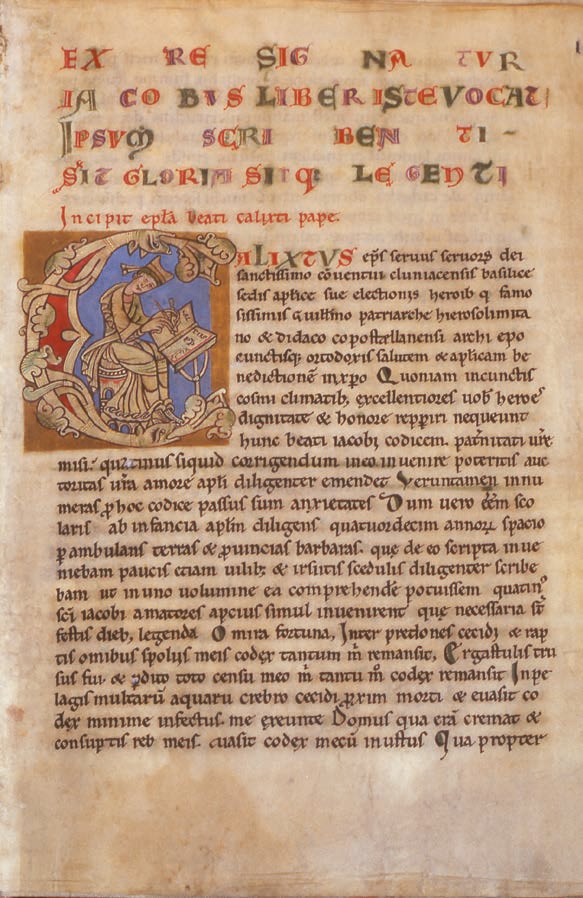
The first known mention is found in the Codex Calixtinus, a 12th-century manuscript preserved in the cathedral of Santiago de Compostela. This codex is a compilation of texts related to the Camino de Santiago and has been fundamental in preserving and transmitting many traditions and knowledge about the pilgrimage.
In the Codex Calixtinus, it appears in the musical section of Appendix II, specifically in the refrain of the hymn “Dum pater familias,” also known as the “Song of Ultreia” or “Song of the Flemish Pilgrims.” This hymn is the oldest of the pilgrim songs and has been sung by pilgrims from all over the world upon reaching the cathedral of Santiago de Compostela, marking the end of their long and arduous journey.
The refrain of the song goes:
Herru Santiagu,
Got Santiagu,
E ultreia, e suseia,
Deus adiuva nos.
¡Oh, my lord Santiago!
¡Oh, great Santiago!
¡Forward! ¡Upward!
¡And may God protect us!
This song, in Latin, the lingua franca of Europe in the 12th century, combines words from different linguistic origins, reflecting the cultural and linguistic diversity of the Camino de Santiago. From its beginnings, the Camino has been a place of encounter and union of different languages and cultures, and this tradition has been maintained throughout the centuries.
Its Use on the Modern Camino
Although today it is more common to hear “¡Buen Camino!” among pilgrims, ultreia and suseia still resonate on the Camino de Santiago. Some pilgrims continue to sing the “Song of Ultreia,” keeping this ancient tradition alive. Knowing the meaning of these words can enrich your experience on the Camino, allowing you to connect with the history and spirituality that surround this pilgrimage.
The Camino de Santiago is not only a physical route but also a spiritual and emotional journey. Pilgrims often find in the Camino a space for personal reflection, connection with nature, and communion with fellow travelers. These words encapsulate this spirit of camaraderie and mutual support, reminding us that, although the path may be difficult, we can always find the strength to move forward.
Prepare for Your Journey with Tournride
If you are ready to start your bicycle journey with Tournride, do not forget to carry with you the spirit of Ultreia, suseia, Santiago! Let’s go, pilgrims, for Santiago is beyond! And remember, for any doubts or needs before embarking on your adventure on the Camino de Santiago by bicycle, we are here to help you.
Frequently Asked Questions
What does “Ultreia et Suseia” mean?
“Ultreia” means “onward” or “beyond”, and the traditional reply “et suseia” means “and upward”. Together they formed a medieval cry of encouragement between pilgrims on the Camino de Santiago, urging one another to keep going.
Where does the word Ultreia come from?
Its first known mention is in the 12th-century Codex Calixtinus, kept in the Cathedral of Santiago de Compostela. It appears in the refrain of the hymn “Dum pater familias”, the oldest of the pilgrim songs, also called the “Song of Ultreia”.
How do you reply to “Ultreia”?
The traditional response is “¡Et suseia!” (“And upward!”). One pilgrim greets with “¡Ultreia!” and the other answers “¡Et suseia!”, as a sign of solidarity and mutual support along the way.
Is it “Ultreia” or “Ultreya”?
Both spellings refer to the same medieval greeting. “Ultreia” is the most common form today, while “ultreya” is an accepted variant.
Do pilgrims still say Ultreia today?
Yes. Although “¡Buen Camino!” is now more common, many pilgrims still use “Ultreia” and sing the “Song of Ultreia” upon reaching Santiago, keeping this centuries-old tradition alive.