How we clean every Camino bike: biodegradable bike cleaning with X-Sauce
Tournride TeamEach Tournride bike rides an average of 7-10 stages of the Camino every year before returning to the workshop. It comes back with dust from the Meseta, mud from O Cebreiro, salt from the Atlantic coastal air, leftovers from the woods near Sarria, and a drivetrain that has worked over 700 km. The unavoidable question: what do we do with all that dirt?
Short answer: a biodegradable bike cleaning process using X-Sauce products, a Spanish brand that formulates degreasers and lubricants designed so that whatever goes down the workshop drain is not a petroleum-based solvent. No aggressive chemicals on the cassette, no troubling residues in the water leaving our facilities.
This post is the “behind the workshop” version: the four before-and-after photos, the exact products we use, and why we think this matters beyond marketing. Tournride has been renting bikes for the Camino for over twenty years, and using only biodegradable cleaners for more than five. This is what we do every day with every bike.
The invisible problem: rinse water has to go somewhere
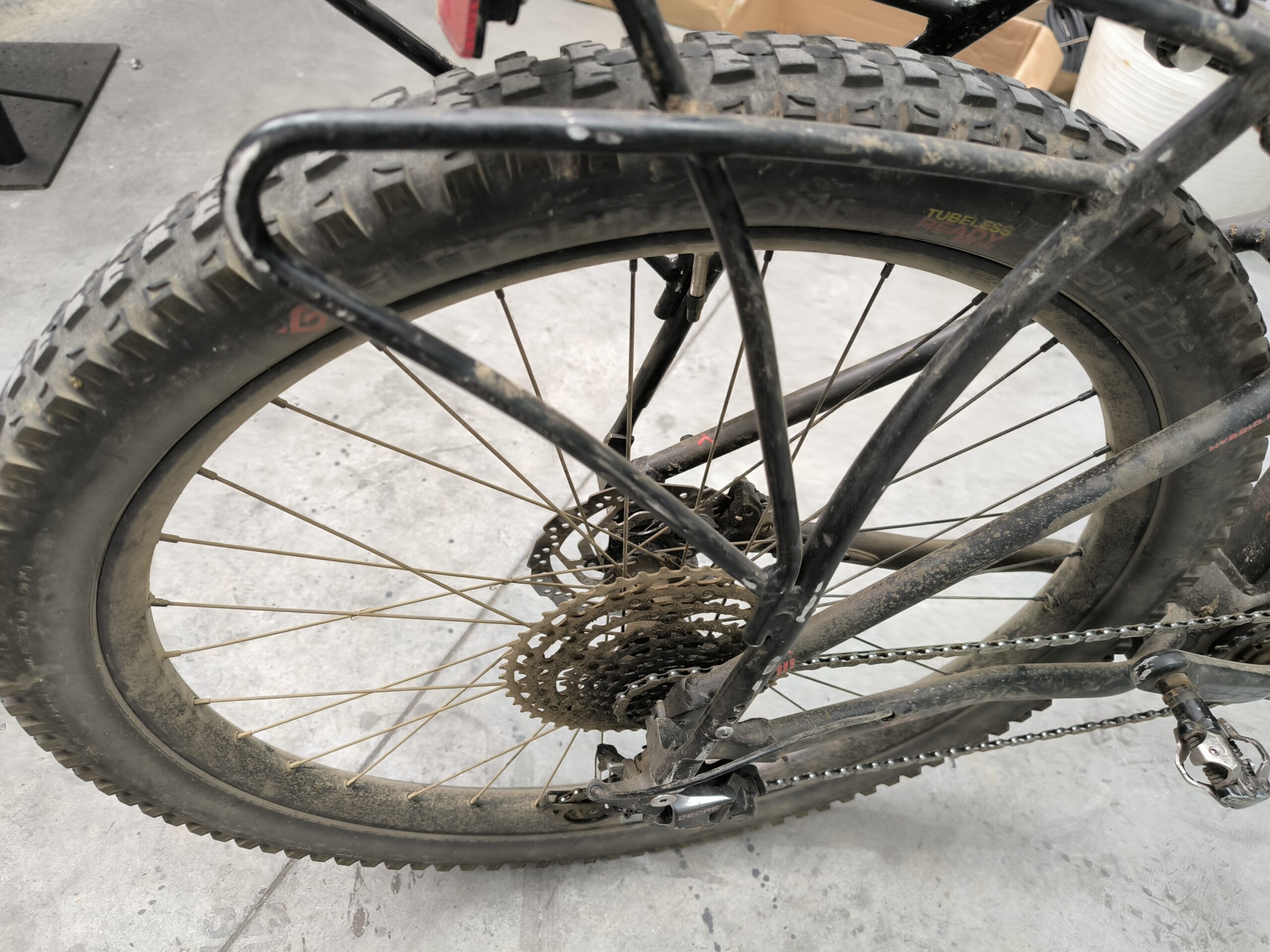
Our workshop is in Santiago, at the end of the Camino. That is where we wash every bike when it comes back. And that rinse water, once it has flushed away the dirt, doesn’t stay in the bucket: it ends up in the workshop drain, and from there, via the sewer system, into the nearby rivers — the Sar and Sarela cross Santiago, then flow into the Ulla, which empties into the Arousa estuary. Much of that basin is part of the Natura 2000 Network.
Conventional bike degreasers and cleaners contain petroleum-derived solvents (modified kerosene, chlorinated hydrocarbons). When rinsed away with water, they reach the sewer and — given that treatment is in many cases limited — a fraction ends up in the environment. It is not a massive ecological disaster: the volumes we handle are nowhere near that scale. But it is an avoidable footprint.
If the cost of avoiding it is reasonable, there is no debate. That is why we choose biodegradable products.
Why we chose X-Sauce (and not the cheapest option)
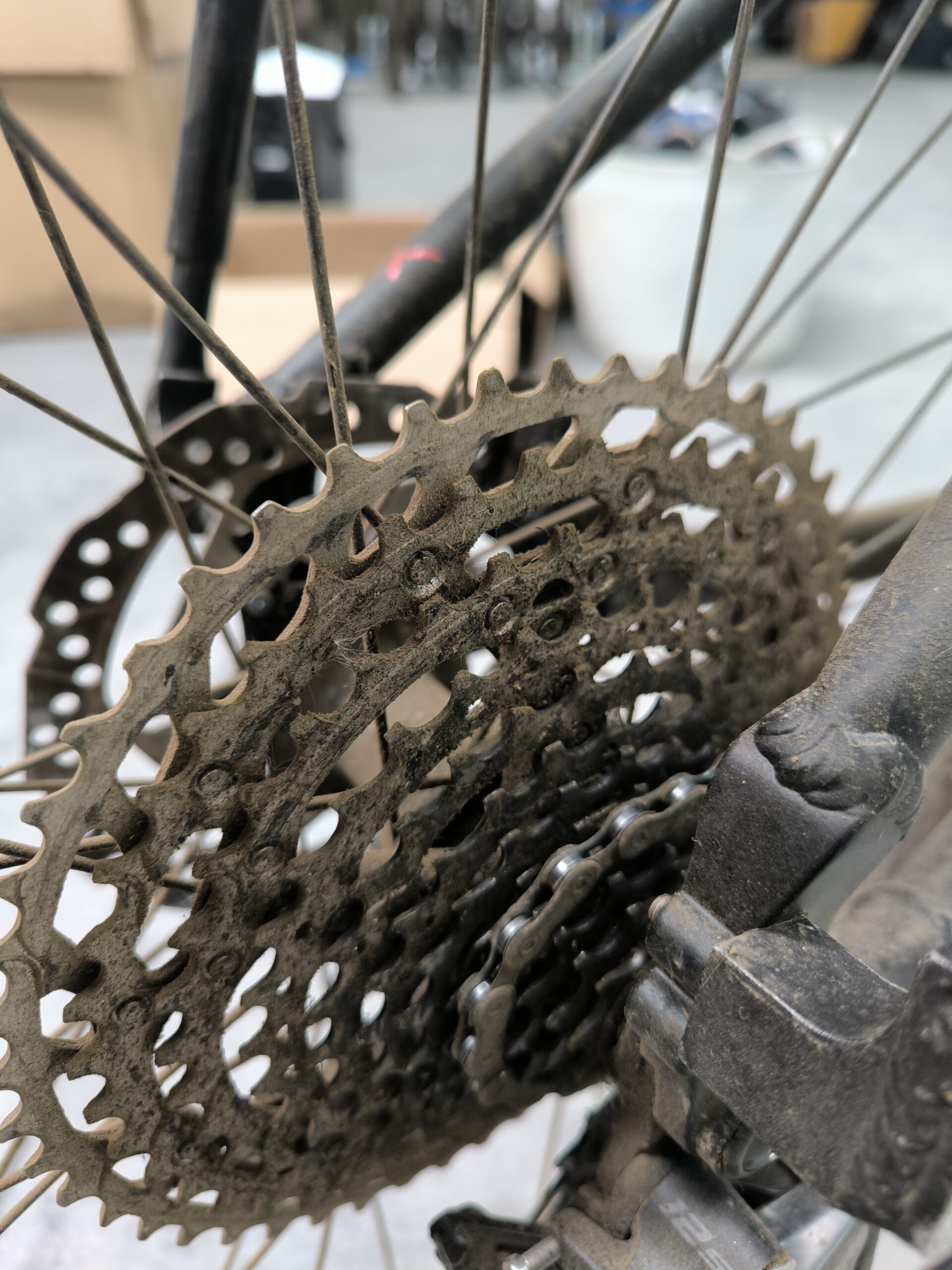
A note on this photo: the brown paste with dust stuck to it is typical of oil that has built up in use, not wax. It is one of the reasons we are moving most of the fleet over to ECO-LUBE wax — it attracts less dust and stays cleaner kilometre after kilometre. If your rental bike starts making noise on the road, please call us before applying anything yourself: adding a generic lubricant on top of the existing one usually makes things worse.
We have been testing alternatives for years. Our current choice is X-Sauce, a Spanish brand that formulates three cleaners and a couple of lubricants:
- Chain degreaser (fluorescent green) — biodegradable, breaks down old grease without damaging rubber seals or anodised components.
- General bike cleaner (pink) — for frame, wheels, saddle and levers. Biodegradable; also works as a mild degreaser when the drivetrain is only lightly soiled.
- Brake cleaner (blue) — biodegradable, leaves pads and rotor free of greasy residue and improves braking.
- ECO-LUBE (dry wax) and Watts Lube (gel for wet conditions and e-bikes) — wax doesn’t attract dust, and the small amount that drips to the floor is biodegradable.
Why X-Sauce and not another eco brand? Because it ticks three boxes that are non-negotiable for a fleet like ours:
- Made in Spain: short supply chain, from manufacturer to workshop in hours.
- Public technical sheet with declared composition (not just a “natural formula” claim).
- Sustainable cost per bike: a 5 L drum of degreaser (around €32 incl. VAT) lasts for roughly 100-150 bikes; the pink general cleaner lasts a bit longer. For a fleet that varies between 250 and 300 bikes over the year (with continuous turnover: bikes retired to the second-hand market, new ones added depending on the season), each washed several times, the cost per bike ends up being marginal.
And one less obvious benefit: the mechanical washing time — the active brushing per bike — dropped from roughly 14 minutes to about 10 when we switched to the X-Sauce process. The green degreaser acts faster and the brushes do more work per pass. Four minutes per bike doesn’t sound like much until you multiply it by an entire season.
One more operational note: the choice between dry wax (ECO-LUBE) and oil is made by the final-check mechanic, just before the bike is prepared for handover, looking at the weather forecast for the coming days. Dry days ahead, wax; rain incoming or a high-torque e-bike, oil. We are seeing that wax holds up well over our customers’ long rides and prevents dust build-up on the drivetrain.
Our biodegradable bike cleaning process, step by step
1. Pre-rinse with a Karcher: professional, not reckless
Yes, we use a Karcher pressure washer. We use it for the entire wash — frame, rims, drivetrain, fasteners — because we are professionals and we know where not to aim the jet: bottom-bracket bearings, hubs, e-bike electrical components. Forcing pressurised water into those points kills a bike in six months. Used with care, the Karcher is the fastest and cleanest tool for stripping mud and stage grime before the chemical degreaser comes in.
2. Drivetrain degreasing (green)
We apply X-Sauce degreaser (green) generously over cassette, chain, chainring and rear derailleur. We leave the chain on a mid cog so it has even tension while we brush — most of our fleet is single-chainring (only the odd gravel bike is double), so there’s no big-ring/small-ring manoeuvre. We wait two minutes: the fluorescent green turns brown when it has dissolved the grease, a visual cue that it has done its job. We brush the cassette with a soft-bristle brush, and the chain with a three-sided brush (we keep these hanging in the workshop, they are essential). Rinse with low pressure.
3. Frame and components wash (pink)
We spray X-Sauce general cleaner (pink) on frame, rims, spokes, levers, saddle and stem. Soft brush for the frame, spoke brush for the wheels. Rinse with low pressure.
4. Brakes (blue)
If the pads or rotor are heavily contaminated, we remove them from the frame (a procedure done by the duty mechanic, not on every wash). We spray X-Sauce brake cleaner (blue) onto the rotor, wipe it with a clean cloth, and from that point on we don’t touch the rotor with greasy fingers.
5. Air drying and WD-40 protection
We dry the entire bike with compressed air — always controlled, avoiding bearings and electrical components. Microfibre cloth is reserved for fine details, because drying 250-300 bikes by cloth alone would take forever. Right after drying we apply WD-40 to the drivetrain and moving parts: it protects against rust while the bike sits in the workshop queue — several hours can pass before it reaches the first mechanic, and we want zero rust in that interval. The final lubrication (ECO-LUBE wax or oil, depending on the forecast) is decided and applied by the second mechanic on the workstand. We’ll cover that next.
These two pairs of photos — before and after — are what we managed to capture between stages: at peak season the workshop is flat out and the team isn’t always free for a photo session. They are the real proof of the process, not a staged setup.
The order — cassette → frame → brakes → lube — runs from “dirtiest” to “cleanest”, to avoid contaminating areas already treated. But washing is only one piece of the pipeline.
And then, the workshop: two mechanics and a tablet
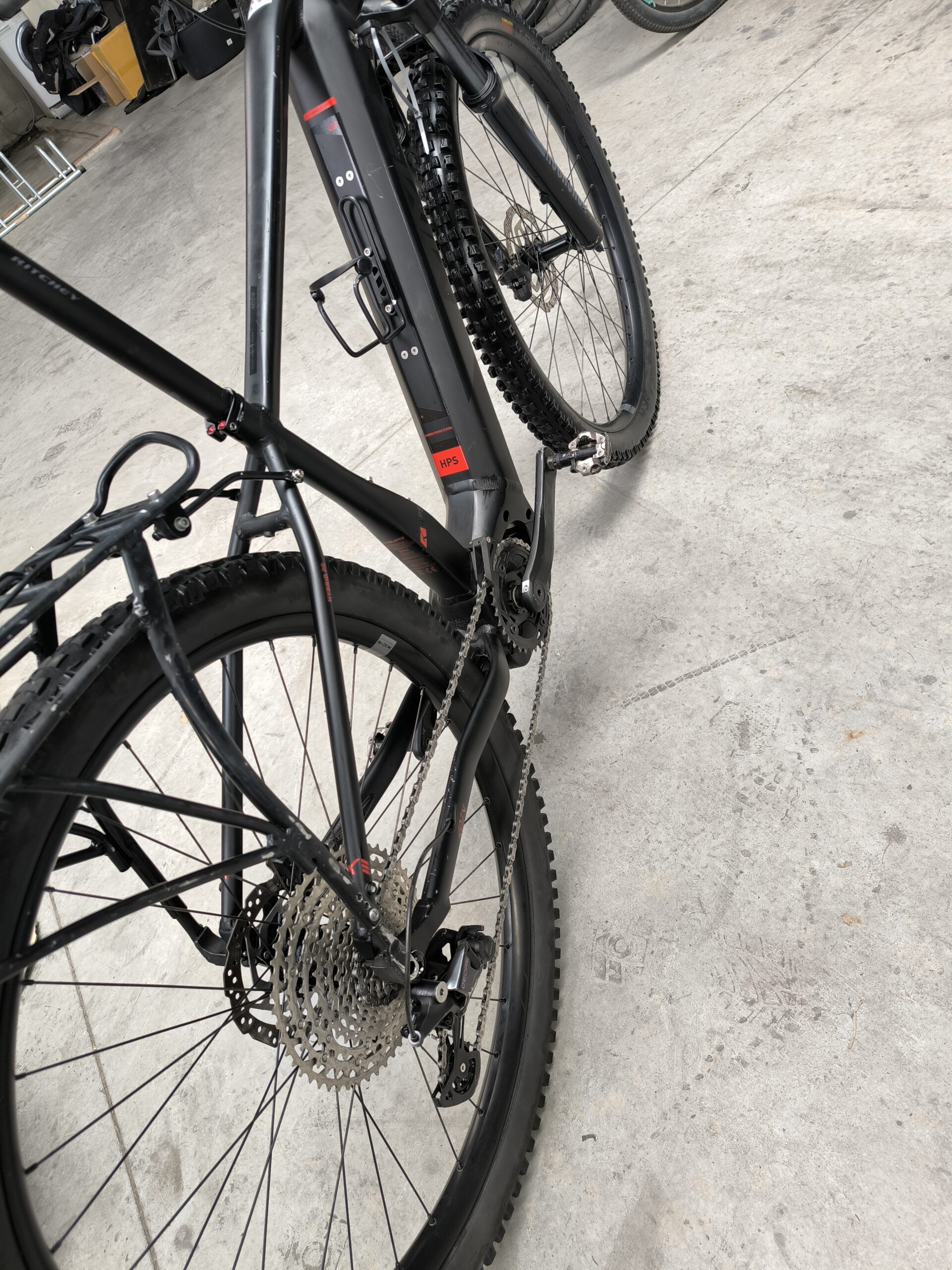
Before a bike even touches water, it is already in our pipeline. When a new booking comes in, the logistics team member — tablet in hand — pre-assigns the specific bike for that pilgrim: correct size and model for their profile. That pre-assignment triggers one of two routes:
- If the bike is dirty (just back from the Camino), it enters the wash queue.
- If it is already clean and available, it skips straight to the workshop queue.
The wash team member, after finishing the X-Sauce cycle you saw above, marks the bike as washed on their touchscreen — and it automatically moves from the wash queue to the workshop queue. From there, the bike passes through the hands of two mechanics:
- First mechanic — checks, consumables and a wipe-down. Inspects the gears, checks for play in hubs and headset, adjusts brakes and, if anything is out of tolerance, replaces pads, chain or cables. Wipes the frame, rims and components with a clean microfibre cloth to remove any water or dirt left after the air dry. Once the bike passes, a tag goes on it for the next stage.
- Second mechanic — fine-tuning, final lubrication and check. The most experienced of the workshop. Fine-tunes shifting and brakes, checks the weather forecast and decides wax or oil for that bike. If it’s ECO-LUBE wax: the chain must be 100% dry, drop by drop on each link, twenty pedal turns, then wipe off the excess (the wax air-dries in four to six hours, which is why this step usually goes at the end of the day). If it’s oil: direct application and excess wiped off. A final pass with a microfibre cloth to clear any remaining smudges — fingerprints, lube residue or anything picked up during the adjustment itself. Tyre pressures and final OK signed off. Only after this check does the bike head out to the pilgrim.
It is a deliberate double check: the first mechanic focuses on the structural side (consumables, play), the second on the finishing touch that separates a “reasonably good” bike from one ready for 700 km of Camino. And here lies an important difference with a regular workshop. We don’t wait for something to fail. We track kilometres and stages on every chain, every set of pads, every cable. As they approach their threshold we replace them — early, not late. If your booking is 12 stages, the bike goes out with margin for those 12 and then some, in case you decide to extend the route or the wind forces you to push harder than planned. Maintenance is preventive, not reactive.
What you can do during the Camino
- Every 100 km, run a dry cloth over the chain. It removes the loose dust. This alone extends drivetrain life without you touching any lubricant.
- If it rains, don’t obsess about cleaning at the end of the day. Dry the chain with a cloth and store the bike covered. If the rain repeats over several days, take a small bottle of 3-in-1 oil or WD-40 with you (travel-size formats fit in a pannier): after wiping the chain dry, give it a touch so it doesn’t rust or start squeaking. Full washing and proper lubrication we’ll handle when the bike returns to the centre.
- Don’t use pressure water on your own at petrol stations or wash stops along the Camino. Yes, we use a Karcher in the workshop — but we have spent years learning where not to aim it. Without that practice, a misdirected jet kills hubs, bearings and, on e-bikes, electrical components. If your bike is heavily caked in mud or something isn’t working, give us a heads-up: with a day’s notice we can coordinate with one of our partners along the route to inspect or swap it.
- If the chain starts squeaking (a clear sign that the wax has washed off), let us know before pushing on. We’ll coordinate re-lubrication with a partner near your next stop — five minutes of wax now beats a snapped link in O Cebreiro.
Frequently asked questions
Do you clean every bike between customers?
Yes, no exception. Every bike that returns to the centre goes through full inspection and cleaning before going out with another pilgrim. If the bike finishes in a different area and comes back to its origin centre via our transport, the wash happens upon arrival.
Why X-Sauce and not another eco brand?
Made in Spain, public technical sheet with declared composition, and a sustainable cost per bike: a 5 L drum of degreaser lasts roughly 100-150 washes. We tested alternatives (Muc-Off Eco, Restless Bike) in previous years; X-Sauce offers the best operational balance.
Can I wash my bike with any product during the Camino?
Better not. Conventional degreasers contain petroleum derivatives that end up in rivers. If you really need to clean on the spot, water and a cloth. The rest, leave it to us at the end of the route, or we coordinate with a partner along the way if you give us notice.
What if the chain starts squeaking mid-stage?
Let us know straight away — don’t push it. With a day of notice (or a few hours, depending on where you are) we’ll coordinate with one of our partners on the route to take care of it before something breaks. Simple rule: squeak = call. Waiting for the chain to skip or snap turns a five-minute fix into a lost stage.
What do you do with the empty X-Sauce containers?
All to the yellow recycling bin, 5 L drums and small spray bottles included. We would love a return-to-distributor system for the big drums — it would be the logical close of the loop —, but that doesn’t exist today. If X-Sauce sets one up, we’ll be the first to join.
Why biodegradable bike cleaning matters for your Camino
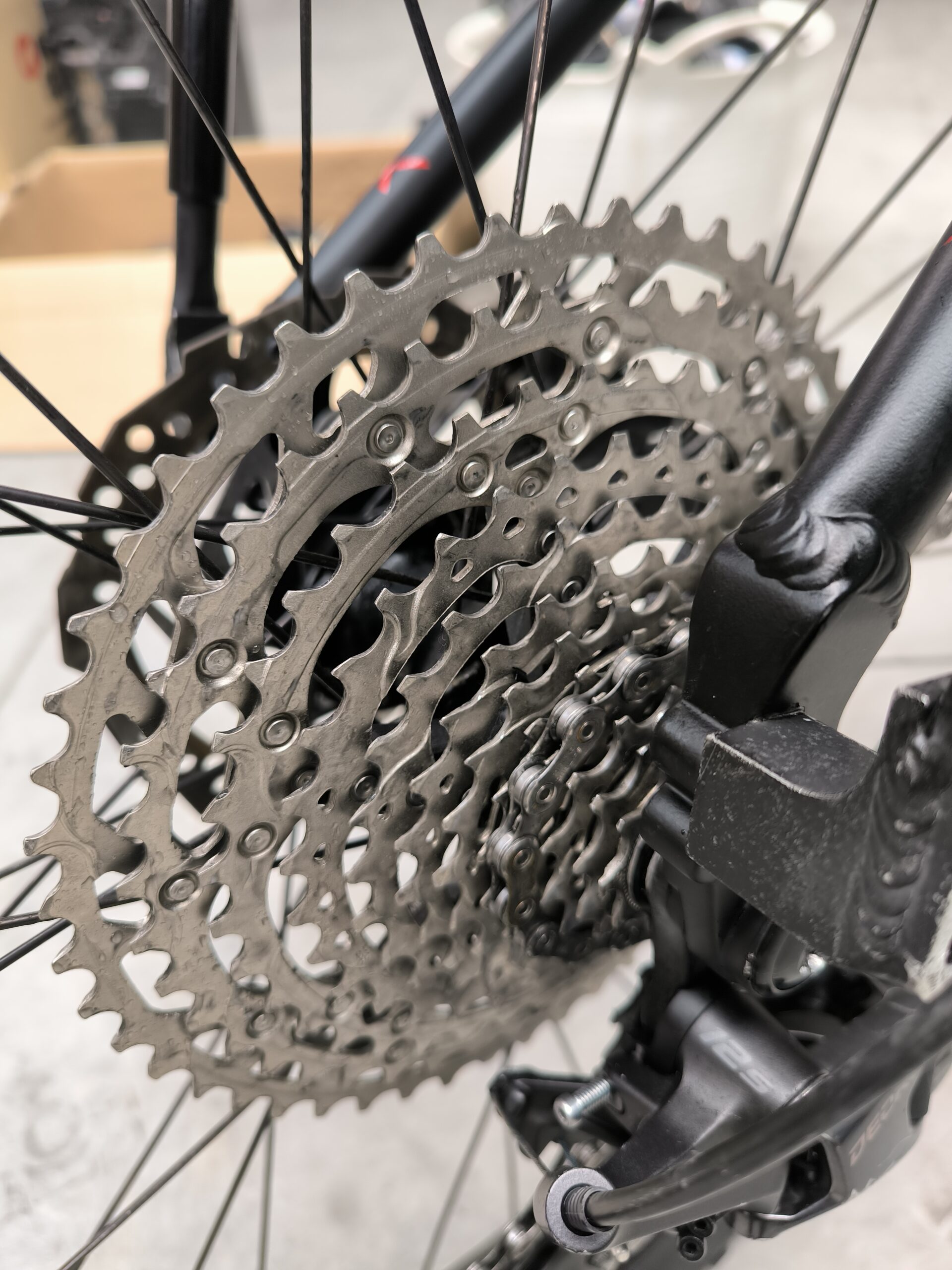
This post is what happens between your booking and the bike you collect in Saint-Jean, Pamplona or Sarria. If you’ve made it this far, thank you for caring about what goes on behind the workshop — it is the small decisions, repeated hundreds of times a year, that make a rental responsible or not. Ready for your Camino with a clean bike and a clear conscience?
More about the service: here are the 14 stages of the Camino Francés by bike our rental bikes ride, and how to book a bike rental for the Camino. The biodegradable bike cleaning we describe here is standard before every delivery, and part of our sustainability commitment.
More about the products: X-Sauce (manufacturer).